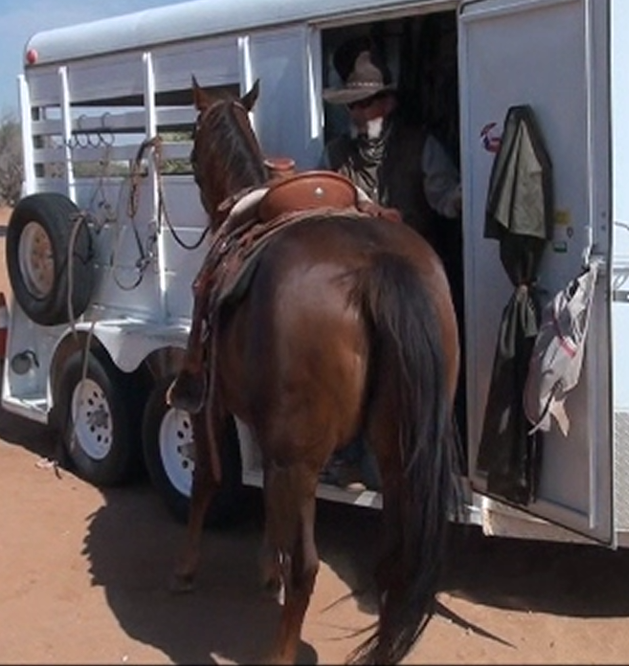
National Day of the Cowboy is both a organization and a day of the year to honor and preserve the pioneer heritage and Cowboy culture. The mission of the National Day of the Cowboy nonprofit organization is to contribute to the preservation of America’s Cowboy heritage so that the history and culture which the National Day of the Cowboy bill honors, can be shared and perpetuated for the public good, through education, the arts, literature, celebrations, gatherings, rodeos, and community activities. National Day of the Cowboy is observed annually on the fourth Saturday in July. The
12th National Day of the Cowboy is today, Saturday, July 23rd, 2016.
From the National Day of the Cowboy website: "The era of the cowboy began after the Civil War in the heart of Texas. Cattle were herded long before this time, but in Texas, they grew wild and unchecked. As the country expanded, the demand for beef in the northern territories and states increased. With nearly 5 million head of cattle, cowboys moved the herds on long drives to where the profits were. Former President G.W. Bush said it well when he stated: “We celebrate the Cowboy as a symbol of the grand history of the American West. The Cowboy’s love of the land and love of the country are examples for all Americans.”
From my point of view we can't lose sight that American Cowboys developed much of their skills from examples of the Spanish Vaqueros whose unique brand of horsemanship is evident predominantly in the Californian and Great Basin Buckaroos.
Cowboying is alive today with full time cowboys, day workers and itinerant cowboys who gladly accept a low paying existence for the freedom of working outdoors on horseback. Cowboys are also exemplified by the professional horsemanship clinicians to work to enhance an understanding of the horse for all of us,....especially for the average backyard horse owner who may only ride a few times a month but dreams of riding in vast pastures and living by a simple but powerful code of conduct, one version which can be found in the book "Cowboy Ethics" by Jim Owen.
1) Live each day with courage.
2) Take pride in your work.
3) Always finish what you start.
4) Do what has to be done.
5) Be tough, but fair.
6) When you make a promise, keep it.
7) Ride for the brand.
8) Talk less and say more.
9) Remember that some things aren't for sale.
10) Know where to draw the line.
Bethany Braley, Executive Director & Publisher for the National Day of the Cowboy nonprofit organization, is available for interviews or to speak to your group or organization regarding the history of this campaign and the challenges we face in achieving permanent passage of the Day of the Cowboy Bill. She has been working continuously on the effort since November 2004, and offers key information on how you and your community or organization may become actively involved in contributing to the success and celebration of this historic grassroots quest. She can be contacted at info@nationaldayofthecowboy.com or by calling 928-795-0951
The more I use my CSI Pad, the more I like it and doubt I'll be using anything else.
The CSI Pad is actually a two piece saddle pad. The bottom piece, either 1/2 or 3/4 inch thick, is wool felt and combines with a thinner top pad, which is the CSI flex plate sandwiched between two layers of automotive carpet, to make the complete pad.
The flex plate is a flat plate of polycarbonate that the bars of the saddle rest over, dissipating the pressure, often the uneven pressure of a saddles bars and rider's weight.
The pressure displacing plate, sandwiched or sewn between two sections of automotive carpet has a narrow strip of Velcro which mates to the felt pad.
Both have pads have holes in the spine to vent heat off the horse's back. I admit that if you separate these two pieces, it takes a little patience aligning the holes, but the concept of a replaceable wool felt pad is a really a great idea and allows you to separate the pads for cleaning. I have two CSI pads, one with a 1/2 inch felt liner and the other is a 3/4 inch felt liner, which are natural felt. I haven't had the need to replace a liner yet and will likely being buying another CSI pad this year.
These are high dollar saddle pads. If you are like me, you'll be eating bologna sandwiches for a month in order to afford one, but you won't be disappointed. In the picture above you can see from the wet spots on the horse's back how the CSI Flex Plate disperses pressure from the bars of the saddle and the rider's weight, keeping pressure off the spine. The CSI Pads are contoured for the withers which make it easy to position and comfortable for the horse.
CSI also offers a Western round skirt and English cut Saddle Pads as well. CSI also has shims available for horse's with anatomical issues. CSI counsels that most horse's do not need the shims and you should consult with one of their saddle fit experts before buying.
While I clean my CSI felt liners using a metal curry brush being careful not to tear up the felt in the process, CSI does offer a rubber cleaning brush which, to be truthful, doesn't work very well for me, hence the metal curry brush for scraping away the built up of hair and dirt before I wash the pad.
Again, if you end up buying one of the CSI pads, you won 't be disappointed......more importantly, I don't your horse will either.
If I'm in an arena throwing loops or otherwise dismounting and having to mount again and again, I'll often just get on the fence and have my horse side up to me so I can mount easily and with less stress to the horse. I've had many people ask me "How did you get your horse to do that?"
What I tell them is that in the beginning most horses will want to face you up if you are on a platform. In other words they will stand perpendicular to the platform or fence. And, if you lead a horse to a platform, most will stand until you get up on the platform, then they move their back end away to see you, which takes them away from you and makes it harder, if not impossible to mount. This comes mainly from the horse's discomfort with seeing something or someone above them and in the beginning not understanding what you are asking of them.
Then I'll continue explaining, that I'll start with halter and lead line, and while I'm sitting on a fence rail, or even standing on a platform like a mounting block, I'll rhythmically bump on the lead rope giving a verbal cue such as "come over" and just when the horse begins to move his feet, I'll stop the bumping. I'll pause for 5-10 seconds then begin again. Doesn't matter if the horse moves one way then the other,...... with a little patience the horse will eventually side up to you so you can mount. Pet on him first.
I believe I heard in an interview with Margaret Dorrance, wife of the late Tom Dorrance, that Tom was teaching her horse, or teaching Margaret to teach horse, to come over to the trailer step or mounting block so she could more easily put a saddle on the horse's back and also mount from the platform. Margaret asked "why do I need to do be able to do that" and Tom replied to the effect that "you'll need this when you get older". That stuck with me over the years. And if you are the one in a thousand who have not heard of Tom Dorrance you should be going to this site.
Anyway, when I ask a horse to come over and get parallel with me while I am on a platform, some horse's will like to put their left side to you and some their right side. So remembering the interview one day when I was in my trailer, I asked my horse tied to the trailer to come over to me so I could take his saddle off and he did lickity split. It was the same side he always presented to me to mount and he did it right away.
On another horse, the horse in the video below, I wanted to try the same thing, asking him to come over giving me his right side, when he always gave me his left side as I asked him to come over to mount. I wanted to see how easily he could discern what I was asking him and why. So from the trailer tack room, I ask him to come over to unsaddle and I could see he was not understanding what I was asking. So I used a flag and tapped on his off side, the left side, as I asked him to come over. As soon as he moved his feet. I stopped tapping and paused for 5-10 seconds then started again. Within a minute he understood and sided up to me so I could reach the saddle from the platform of the trailer tack room.
Now I'd like to think that I really won't be needing to use a platform to saddle or unsaddle for the next decade or two, but I'm just a couple of years away from 60 and have seen many of my friends go to lighter saddles or not ride as much due to the toll of cumulative injuries or just plain aging physically. But getting the horse to think and learn is always a good thing. Safe Journey.
240 years have gone by since 4 July 1776 when the Declaration of Independence, written largely by Thomas Jefferson, was unanimously approved by the Continental Congress, marking the beginning of the a new nation, comprised then of 13 sovereign states, and called the United States of America. Since then America has been a beacon for freedom for individuals and nations across the world. No other Country is as charitable with it's blood or treasure.
The signing of the Declaration of Independence was preceded with hostilities between England and the Colonies in which the shooting war began with the Battles of Lexington and Concord on 19 April 1775 when the British marched to seize colonialist cannons, shot and powder.
The War for American Independence from England effectively ended in October 1781 with the surrender of General Cornwallis' British Army. During those 6 1/2 years of fighting, it was often in doubt if the fledging nation would win it's independence - but the Colonialists won their freedom, not for themselves but for every generation since. That just may be why American's love underdogs.
As with most complex problems with high emotions on both sides of the issue, the over population of Wild Horses and Burros, both on the range and in BLM holding pens, is not likely to be resolved just with birth control of existing bands of these animals. I am not an advocate of the Federal government owning so much of the western lands. The intent of the Framers of our Constitution was for the Federal government to actually own minimal land and then only through negotiations with the states. However, complete management of the land by the states and likely the selling of much if it for energy and agricultural purposes would no doubt result in a campaign to largely eradicate the Wild Horses and Burros who compete with cattle for grazing. I've received hate mail from both sides for my middle of the road approach to the Wild Horse issue...from rancher friends of mine which despise Mustangs and animal rights advocates who can't see the burden on ranching families. I like to think there are moderates on both sides, and hoping that a moderate solution would be come upon. Birth control has got to be part of that solution. The people not wanting birth control or sterilization to be used on a portion of the total numbers of Mustangs and Burros are not moderates in my book.
A federal agency is on a path to sterilize wild horses on U.S. rangeland to slow the growth of herds — a new
approach condemned by mustang advocates across the West. The U.S. Bureau of Land Management also continues to
resist calls from ranchers and western Republicans to euthanize or sell for slaughter the animals overflowing
holding pens so as to clear the way for more roundups.
Bureau of Land Management Deputy Director Steve Ellis delivered those messages at an emotional congressional
hearing this week. He offered a glimpse of the challenges facing the agency that has been struggling for decades
with what it describes as a $1 billion problem.
Highlights of the hearing included Nevada's state veterinarian calling for the round-up and surgical sterilization
of virtually every mustang in overpopulated herds, a protester who briefly interrupted with shouts denouncing
"welfare ranchers" turning public lands into "feedlots," and an Arkansas congressman whose puppy is about to get
neutered.
Rep. Tom McClintock, chairman of the House Natural Resources subcommittee on public lands, took aim at those who
object to euthanizing mustangs "and yet seem perfectly willing to watch them succumb to excruciating death by
starvation, dehydration and disease." "That is the future we condemn these animals to if we don't intervene now,"
the California Republican said.
Rep. Cynthia Lummis, R-Wyoming, emphasized the 1971 law protecting mustangs allows for their destruction if they go
unadopted. But since 2012, Congress has required horse purchasers to sign documents promising not to resell them
for slaughter, and the Bureau of Land Management opposes lifting those restrictions.
Ellis said the estimated 67,000 wild horses and burros on federal land in 10 states is 2.5 times more than the
range can support. However, there's no more room in government corals and leased pastures, where 47,000 horses cost
taxpayers about $50,000 per head over the course of their lifetime. "Quite frankly, we can't afford to feed any
more unadopted horses," Ellis said. "I understand your frustration. We are frustrated too."
Ellis said the agency's "roadmap to the future" includes use of temporary contraceptive vaccines as well as
sterilization. "We feel that before we can implement a spay-neuter program on the range, we've got to do the
research to make sure we can do it efficiently and safely," he said. "It is going to take a little time to do
that."
Rep. Rod Bishop, R-Utah, chairman of the Natural Resources Committee, said it's time to have "that real tough
conversation about something more permanent."
Other Republicans turned on the lone horse advocate called to testify — Ginger Kathrens, founder of The Cloud
Foundation based in Colorado Springs, Colorado and member of the Bureau of Land Management's wild horse advisory
committee. But Kathrens said most Americans want to see mustangs "roam freely on their native home ranges as
intended." "Castration, sterilization and long-term confinement of horses in holding facilities ... is
unnecessary, cruel, unhealthy and fiscally irresponsible," she said.
Rep. Bruce Westerman, R-Arkansas, noted, however, that "thousands of domesticated animals are spayed and neutered
every day." "I've got a new puppy and he's got his day coming soon," he said. That prompted an outburst from Edita
Birnkrant, campaigns director for Friends of Animals. "They are wild animals. They are not cats and dogs," she
shouted as McClintock banged the gavel and called for Capitol Police. "The solution is getting welfare ranchers off
of our public lands, which have been turned into feedlots."
J.J. Goicoechea, the Nevada Department of Agriculture's veterinarian and longtime rancher, urged the gathering of
"as close to 100 percent of horses as we can" in overpopulated herds for surgical sterilization before returning
some to the range. "Those of us who truly make a living caring for animals ... have a moral obligation to manage
populations in balance with natural resources," he said.
Recent headlines: Yuma Arizona - Temps reach 120 degrees....115 in Phoenix; 107 in El Paso. Four hikers die of dehydration in Arizona........yes, the summer heat is upon us. I usually write an article on avoiding dehydration and the importance of drinking water about once a year as we get into the heat of the late Spring because it's important and an often over looked fact about life - that we need water, lots of it, and so do our horses. And everyone has heard of the old adege "You can bring a horse to water, but you can't make him drink."....truth be known, the same is true for humans as well.
A close friend of mine and I joke from time to time about how our wives and children sometimes complain about being tired or having a headache and how we always respond with "drink some water". They'll always respond "You always say that!". There's a reason why I always say that, because most people go around all day in some level of dehydration. Drinking water should be the first thing you try to alleviate symptoms.
People normally quit drinking fluids a few hours from going to sleep, then after sleeping 5 to 8 hours, wake up in some sort a dehydrated state. The first thing you should do upon waking is to drink a glass of water! But most won't, and many horse owners put more thought and anxiety into ensuring that their horses have water than they do themselves. Some people even work their riding schedule around their horse's feeding times taking great care to ensure their horse has had a chance to eat and drink. This is not a bad idea, it's just it can be limiting. Feed earlier, feed lighter before a ride, measure the water tank to determine if the horse had a chance to drink,.....I usually rake smooth the area around a stock tank after throwing feed so I can tell if the horse has drank when I come back to pull the horse to saddle.
Many times I have had to pull a horse and put him in a trailer before he had a chance to eat, so I'll hang a hay net in the trailer, after soaking the hay in water so he gets a chance to get something into his gut and some moisture before being ridden.
I don't give horses measured amounts of water, I just ensure they have fresh, clean free choice water. People on the other hand don't drink the recommended daily amount of water which is about one ounce for every two pounds of body weight. For an 180 pound man, that equals about 6 bottles of water a day, and this is for body maintenance. When you are sweating (losing water) or doing hard work, the need for water goes up quite a bit. I know there is advice being given that recommendations for water intake are exaggerated and that you only need to drink when you are thirsty, but this is simply not true. You can be dehydrated, and pretty severely dehydrated without being thirsty.
Not drinking water because of the inconveince of having to urinate often is just not, repeat, not a good idea. In fact, if you are not peeing fairy often, maybe once every 3-4 hours, then you likely need to drink more water. Same if your urine is dark in color. If you take supplements, you may have yellow or green urine, but after a few hours, maybe four to six hours, after taking your supplements, your urine should return to normal.
I am not going to list all the symptoms of simple dehydration, but certainly if your mouth is dry, if you feel sluggish,...... or stand up from a sitting position, or dismount from your horse and you feel dizzy - then you need to get some water. Here's a tip - diet soda or beer, is not a replacement for water.
Protect exposed parts of your body from the direct Sun; a cotton wild rag or neckerchef soaked in water and worn around your neck can help evaporative cool yourself. Silk wild rags don't hold the water well, but their are other fabrics available, as well as cooling scarfs available at most major hardware stores.
As far as your horses, most of them are good to go for substantial part of the day after eating and drinking in the morning. If I work a horse in the heat, I let him cool off before I hose him off. I'll put him in a pen with water for awhile before I ever offer him feed. Again, I make use of water soaked hay in nets quite often in the summer months.
Take a look at your horses' water tanks. Is that something you would drink out of? I have been to some high end training facilities and some of those stock tanks haven't been dumped and cleaned for quite a while by the looks of it. Sure a horse will drink dirty water when it needs to, but if that horse is in your care, why should it? Providing free choice clean water for each horse goes along way towards reducing chances of dehydration and colic.
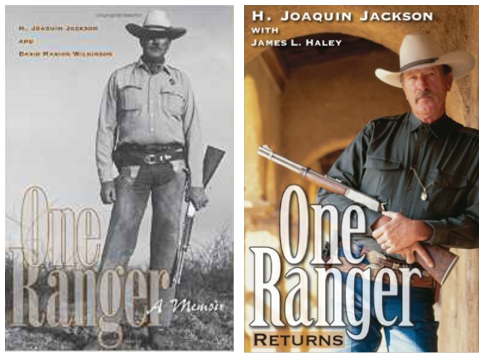
Legendary former Texas Ranger Joaquin Jackson, passed away on 15 June 2016 at the age of 80 at his home in Alpine, Texas.
Joaquin Jackson served as a Texas Ranger for 27 years in Uvalde and Alpine, Texas. When he retired in 2003, he was the senior member of this storied agency. The Texas Rangers were established in 1823, fought in the Mexican-American War, campaigned and protected settlers against the Commanches, are currently heavily involved in the drug wars along the Texas-Mexican border while continuing this day to investigate crimes and corruption across the state. The Texas Rangers are the oldest and most respected statewide law enforcement agency in the United States.
In 2005, Jackson published his memoir, "One Ranger", followed by a sequel titled "One Ranger Returns". Jackson has appeared in numerous films and television productions including The Good Ol’ Boys with Tommy Lee Jones, the TV movie Rough Riders, and the TV mini-series, Streets of Laredo. Actor Nick Nolte used Joaquin Jackson as his role model for the film Extreme Prejudice.
Joaquin Jackson was born in 1935 in Anton, Texas. He attended Texas Tech University and was a graduate of Sul Ross State University in Alpine, Texas. Jackson served in the United States Marine Corps prior to embarking on a career in law enforcement and was a director of the National Rifle Association.
Joaquin lost his first wife Shirley in 2012, remarried and is survived by his wife Jewel, three grown children and four grandchildren. On 25 June 2016 a memorial service is to be held at Sul Ross University in Alpine, Texas.
In the last 10 months or so, I have witnessed several horses who have pulled back from being tied hard and fast either breaking a lead rope snap, or having their feet go out underneath themselves and even pulling neck and back muscles in one case.
In one incident a young women who billed herself as a horse trainer tied her mare right next to my gelding. Her horse was not sacked out on being hard tied, especially in a strange arena, and soon pulled back getting that threatening pressure on her poll (behind the head) breaking the lead line snap. The young woman tied on the lead line and proceeded to lunge her horse thinking that if she gets tired or loses some energy she will be better. The way she went about lunging that horse just reinforced that mare's level of anxiety. Then the woman re-tied her horse, hard and fast, to a 30 foot gate that was on a wheel. Well, the horse pulled back again, this time pulling that gate on the wheel herself...repeating the process of pulling back, the gate chasing her, then pulling back again, and the gate chasing her, etc. I started walking over to the horse with the intent of disengaging her back end, while the young woman ran to a position between the horse and the gate, further spooking the horse who pulled back again slamming the gate into the back of the woman in a process that repeated itself until the horse paused long enough so the woman could get the lead rope untied. Then to make things worse for that mare, and likely in a fit of embarrassment and anger, the woman she started jerking on the lead rope yelling at her horse. All this could have been avoided if she had her horse good at tying in the first place,......oh yeah,..........and not tying to a gate!
One of the worst cases I saw was a horse being tied with a lead rope and a chain around the horse's nose. While the pressure, when pulling back, is on the horse's poll, if the horse get's his head up or has his feet go out from underneath him, substantial damage on the nose can occur. While I have used nose chains in the past, I won't ever use them again. I cringe when I see them and if I have a horse that can't be handled without a nose chain, well, I don't need to handle him then.
I have also had riders and their horses at my place asking for a pen for their horse as their horse won't stand tied. I always think "why don't they stand tied? Kind of minimizes what you can do and where you can go, now doesn't it?" I've had horses like that, and I've worked with the horse through most of the issues because I had to. And even if they are hobble broke, I'd still want my horses to be able to stand tied.
Horses are not born ready to tie. They must be taught this, or more appropriately they must have the time to learn that standing tied is a good deal - it's a resting spot. But all horses can be spooked and if spooked, can pull back, and if hard tied, will get that overwhelming pressure on their poll from either a webbing halter or a rope halter. This causes many of them to panic and pull back harder usually breaking a lead line snap, and if on a lead line tied into a rope halter, they can break a rope halter. This can be particular bad if inside a hard roofed trailer where the sudden release of a broken lead can send their head into the roof - and in some cases kill or badly hurt the horse.
17 years ago or so, in what later became my Functional Tie Ring (FTR), I started using a friction device in order to provide a measured friction release for a horse pulling back, with the lead line being fed by the horse's body weight through a ring. There have sure been some funny moments when a horse of mine, that was hooked through the tie ring on a 25 foot line continually pulled back while turning in a circle and ended up wrapping the lead line around his legs two or three times - unconcerned about the rope wrapping him up, it did not deter him from biting the value stems off two trailer tires. He stood for being wrapped up as I had sacked him out on ropes around his feet, hocks and legs....and was able to get him to lead with a rope around any foot.
So now days, while I occasionally hard tie a horse, I use the FTR when grooming, saddling or unsaddling, trailering someplace, and, I use cross ties with FTR's when I have horses on the shoeing stand or wash rack. But I only use the FTR when I have sacked that horse out on pulling back so they can learn they don't have to pull back or if they pull back, a pause in pulling back will give them that release from pressure, primarily on their poll, then they quit pulling back. Boy, that's a mouthful.
I'll hookup a lead line with the FTR, ensuring the halter is properly fitted and the lead line does not have much slack in it (to minimize the jerk when the horse pulls back initially). Then I'll back away then re-approach the horse with some stimulus such as a flag to get the horse to pull back so he finds a release when there is a pause in pulling back. It's important to cease the spooking stimulus when the horse stops pulling back. This is his reward. Then I'll give him a break, rubbing on him, and when he is ready I'll cinch the lead rope back up and doing it all over again. Each time, the horse will react less and if done repeatedly, again giving a break and rubbing in between, the horse will eventually not pull back at all, or maybe just a slight head toss. This whole process may take 5 minutes or it may take 15 minutes. I can't remember a horse ever not getting a profound reduction in his pulling back behavior ever taking more than that.
In the video below I have a older horse, a pony really, who was left with us and has not been handled much in the past several years. His first encounter with the FTR was when we pushed the record button on the video camera. I had no idea on how he would do when tied with the FTR and given some horse spooking stimulus.
There are many tie rings on the market. The Clinton Anderson tie ring is a good tool as well, I just like my FTR better because you don't have to use a swing arm to keep the rope in place. If someone doesn't want to buy any particular tie ring, I'm sure an alike device can be fashioned and you may even save a few bucks. Make sure the rope you are using feeds easily through whatever tie ring you are using.
I hope this helps some of you. I caution you if/when you try this. Go slow. You can always increase the pressure, incrementally as needed. Better yet to get some help from someone who has done this before. And it is always better to take all day getting it done as opposed to trying to get it done on some arbitrary time schedule and end up getting you or your horse hurt. Don't do that. Please!
A client was bringing a horse over to work on putting a better handle on the horse. The horse was an older rescue horse that has likely seen many owners over his life. The client had owned it for just a couple years. When the horse showed up, his toes were as long as his heels so I remarked that he looked like he was overdue for a trim. The client told me that the horse had to be sedated for the shoer to handle and trim his back feet. From what I understand from the current owner that this was the last time the feet were trimmed. I can see sedating a horse once or using Scottish hobbles once to get the feet trimmed, but before the next time the horse is due, he ought to good at having his feet handled if he is to be a riding horse, otherwise you are just putting off the problem.
There are a few horseshoers that I have either known or heard of that horses, but Texas requires a Veterinarian do the sedating. But the problem wasn't legal in nature or getting an over worked Vet out to sedate and trim the feet, the issue was with people in this horses past trying to pick up the back feet and having the horse pulling his feet away or trying to kick, and learning in the process that he can do just that to get people to leave his back feet alone. How many times have you heard someone say "the horse don't like ____________." Insert, 'being tied', 'wearing a back cinch', 'swinging rope around him', or in this case - 'having his back feet handled'.
So back to the client,....I said "Let's get a halter and lead on that horse and see if we can't get him good at his back feet being handled." Once we got a halter and lead on, it was apparent in about 3 seconds that this horse, although was rideable, was simply not broke to lead.
I actually think this is common. I've seen many horses who were ridden in competition but who were less than adequate when being handled from the ground. So you see it in horses that start to walk off without a cue,......you can get them to stop, but then again they want to move off. Sometimes you ask them to stop and they just gotta move their feet, always appearing distracted. My client's horse was the same way and when I got a halter and lead line on him then tried to direct him with the lead he would put his shoulder in, swing his butt over the try to kick me.
I explained to my client that the horse needed to be able to walk on a loose lead, keeping pace when you change the tempo of your walk up or down, and stop when you stop. That you should be able to back him up using the lead, direct him towards you or in a different direction, move his shoulder in or over, or disengage his hindquarters all before much else is done. He need not be perfect, as you can work on that, but he should be pretty functional at all those things before you get on his back. This horse wasn't. You have heard the saying that all new horses should be started over? Well, it's true. I still have one horse that I try to plug holes in because I did not start him over from the beginning. Apparently I still haven't learned by lesson!
Anyway, I lunged the client's horse on a 16 foot lead, keeping him at a trot, popping him on the shoulder or rear end with the poppers on the end of the lead rope as I needed to when he tried to either run into me or start to kick me. When he tried to break down (slow down and change gaits), I drove him on and it wasn't more than 5 minutes that his body language softened and he started licking and chewing. Sure, he still looked at me side ways since he previously had gotten away with his shenanigans.
I brought the client, who had never lunged a horse on a line, into the round pen and coached on how to lunge the horse and drawing the horse to a stop, so he disengages his back end and puts both his eyes towards you. Then changing directions and changing directions while moving. So I sent the client's home with the idea that the ground work needed to be reinforced and done as often as could be during the coming week then to bring that horse back to me where I would show, then have the client, work the horse from the fence, get the horse sacked out to a rope, leading by a roped foot, having a line come across the butt and hocks, then get on with getting his back feet safe to be handled. This is the best way I know how and when the horse is brought back over we'll work on getting a video of it.
Happy 92nd Birthday to the United States Border Patrol. Founded on 28 May 1924 to patrol the border mostly on horseback to
prevent illegal entries across the border. Earlier on, there were mounted inspectors as early as 1904 operating out
of El Paso, Texas and actually had the primary duty of preventing illegal immigration by Chinese immigrants. While
the first Border Patrol station was built in Detroit 1in 1924, a second Station in El Paso Texas built one month later is
known as Station One.
Being the largest uniformed Federal Law Enforcement Agency in the U.S., Border Patrol agents exercise a wide range
of missions across many environments including manning a few internal checkpoints on U.S. Interstate and Highways.
Specialized Border Patrol units conduct arrest warrant service and manhunts like the missions hunting the
escaped prisoners in New York; perform search and rescues; are often the first law enforcement officers in
devastated areas such as in the aftermath of Hurricane Katrina to provide law enforcement presence, search for
missing and injured people and perform first responder and subsequent emergency medical treatment.
The Border Patrol, first under the Department of Labor then later under the Immigration and Naturalization Service
(INS) and lastly, now under Department of Homeland Security, continues to patrol the U.S. border with Mexico and
Canada as well as some coastlines and waterways.
While aerial patrols now fall under another agency, Border
Patrol agents to this day patrol the border in trucks, ATV's and on horseback. In fact, there are several hundred
horses in the U.S. Border Patrol performing daily duty protecting this country's borders from illegal entry not
just from immigrants, but from narcotics smugglers and potential terrorists.
Since 1904, counting the original mounted inspectors, the Border Patrol has lost over 120 agents in the line of
duty, more than any other federal law enforcement agency. The most publicized line of duty death was Agent Brian
Terry killed December 2010 in Arizona by heavily armed bandits who were out ripping off dope loads being smuggled
across the border. Some of the guns used by the bandits were traced to the Bureau of Alcohol, Tobacco and
Firearms (ATF) 'Fast and Furious" gun selling scheme.
It is not uncommon for narcotics smugglers to bring drugs across the border on pack horses, often traveling for a
few days to get to a "load up" site to transfer the drugs, then turn the horses loose when they
haven't been watered or fed for a couple days. At least the horses in the Border Patrol mounted unit, usually
Mustangs, are very well cared for and have a legitimate job getting agents into remote areas, best patrolled on
horseback, to detect and intercept illegal activities.
April wrote to say "I am trying to become a better rider, realizing that riding only 2-3 times a week makes it
difficult to be even marginally better. I really can't go to clinics as they are too far away and too difficult to do. There is a local dressage club, but that does not appeal to me. My question is what do you
work on or what can you do by yourself to refine your riding skills? Thank you. "
I think you an get some improvement by limited riding - it's likely how you approach it. As far as clinics, they
can be really useful but if they are not possible for you right now then there are many DVD's from tophands
available and they can help. Having someone watch you or even video taping you for later review can help as well.
Dressage may not appeal to you, me either, but auditing a schooling session or, better yet, riding with some of
those folks may help you become a better rider. The way I look at it, dressage riders have to know what they are
doing to sit in those tiny saddles! Some dressage clubs also offer Western dressage. I don't know much about it
though, so I might be negligent in saying it's just dressage in a western saddle,....likely it's a little more
than that, I just don't know. If the competition aspect of dressage (or other events) bothers you, so could just
approach that work from a training angle as opposed to just competing for ribbons or buckles. I know that
competition sometimes brings out the worst in some people, but it can also serve to illuminate shortcomings and
motivate others.
As far as becoming a better rider, I think I've always wanted to become a better horseman and never much thought
about just the act of riding until a fairly short time ago. I remember about 12 years ago I was riding with some
cowboys on a gather in a BLM managed grazing unit. One of the older cowboys said to me something to the effect
that I have slow hands - meaning that I was not trying to man handle my horse through the reins. It was meant as a compliment and I took it that way. He also said something to the effect that he was happy to cowboy with me. I replied that I was just trying to become a better horseman. He thought I
was trying to funny or something. I'm not saying that cowboys can't be horsemen or vice versa, just that my focus was getting
better at communicating with horses and riding is just a part of that.
I always thought I had a pretty good seat and rode in a balanced manner. I've been on some broncs (by accident mostly)
and have other horses bolt and take me for a ride. But now I realize that I could use some improvement when it
comes to simply riding horses as it pertains my seat, posture and balance. On that thought I brought in a noted
area dressage rider and teacher, Martha Diaz, to give a private clinic. We worked simply on circles and straight
lines where I was critiqued that I had a tendency to ride with my back a little too rounded, needing to be
straighter; that I was dipping my right shoulder when riding circles to my right; and when riding circles to the
left I was not riding the outside of my horse and also letting his outside shoulder drift.
I was basically unaware of these faults but now am cognizant of looking to correct these faults when riding.
Maybe an option for you April is to have one of the better dressage riders work with you one on one once a month
or so. Another option would be to video tape yourself riding which may help you see things in a different way
than from the saddle.
I'm sure this will be my first and last article on politics but I thought it appropriate to say just a couple
things about politics since this year is just plain crazy for politics at the national level. And at the local
level where I live, I have become involved to support a friend of mine running for County Sheriff...his name is
Tom Buchino.
Tom, like many of us, had very little desire to get involved in politics excepting to vote which is really just a basic
obligation. Many current El Paso County Sheriffs office employees, county citizens and neighboring law enforcement officers
had been asking, even pushing Buchino to run for the office for the past 18 months. Tom is a retired Green Beret
Sergeant Major and like the culture he served in and the men he led, when asked "who will go?", Tom replied "send me" and stepped up
to run a campaign, win the office and make the necessary changes to right a declining agency.
While I am not advocating sending money to politicians, I am advocating that everyone at some level needs to get
involved to help determine who we elect to office. Write letters or e-mails to your elected officials about the issues that concern you and the solutions
or platforms you would like to see them take. Get your family and friends involved as well. Talk about the issues
and get to the polling stations and vote.
We had a little fun and shot the short video below to support the Tom Buchino for El Paso County Sheriff campaign. We did
another one which I won't be posting as I am opinionating about some of the issues and this site is about horses. Well shoot, you talked me into it........What the hell is going on in this country? The absolute craziness of biological males using female restrooms with 7 year old girls in attendance? Does anyone really support that? What about the segment of the population who has chased God out of our school rooms and are now trying to run Him out of the country like a common horse thief. Please get involved and get in touch with your representatives at what ever level. After
all, these politicians work for us.
I'm not a horse racing fan, nor a fan of any equine competition where young horses are stressed through training and performance before they ever mature. I understand that for many there is pressure on performing and earning checks to keep everything from food on the table to hay delivery coming through the gate so it's necessary getting horses performing as soon as possible, but I just think there needs to be some regulating of putting stress on young horses.
Think about it. Horses competing as three year olds may only have a true age just over 2 years as they may be coming 3 years in the competitive year. That means they have to have been started (in training) well before becoming a true two years of age. So I was pleased to see a message posted from Cowboy Dressage World Switzerland that stated "Fantastic news for the welfare of horses coming out of Switzerland and Germany yet again! Their respective Quarter Horse associations have resolved to prohibit 3 year old horses from ridden competitions and futurities as of March 2016. Horses must be at least 4 years old before they are permitted to compete under saddle. The article states this is following a global trend and questions being raised about horse welfare. They also resolved that 4 year old and older horses can be ridden 2 handed in a snaffle or hackamore. Well done Europe!! Come on rest of the world!"
I ran a large horse facility for six years or so and we would get calls from several racing stable owners at the local racing track offering free horses, mostly always Thoroughbreds. Some of these horses weren't working out very well on the racing circuit and the owners just wanted to get these horses off their feed bill. More often than not, these free horses were young and had some sort of injury. I couldn't keep some of the novice horse owners from jumping at the chance of a free, well bred horse. Often I would often go down to quarantine to check in a new horse only to find it lame. Bowed tendons, damaged suspensary ligaments, non-specific problems in the stifle were common and would get worse once the anti-inflammatory and pain management drug protocols were no longer being given. Some of these horses had been pin fired as well.
Often other problems wouldn't become apparent for years such a detioriating joints, bog spavin in the hocks, or just odd footfalls at certain gaits.
The deal with starting horses in intense training while they are not physically (nor mentally) mature is that not only are injuries more common but physical stress and damage on developing bones and joints may create conditions that may not be apparent or become chronic until later years. I really like the idea of starting horses at two or even three years of age. Even though you may have been handling that colt since he was born, letting him learn pressure and release from a lead line, which is good for him, I mean starting in getting him broke to a saddle and getting a few short rides in the round pen. Turning that colt back out and starting again the next year continuing his training and starting to put a handle on him. Then at four maybe five he's being ridden a lot, and is what you call a using horse.
I am not going to change the industry, nor am I going to thin bad of all the trainers in those disciplines where horses are started, trained long and used hard while they are young. I think just in a perfect world horses are allowed to mature before we ask too much of them.
Jennie wrote to ask about fixing her horse's high head set: "Hi, I wonder if you have any experience or ideas for a horse who has a high head. It's like he is stretching out to see over the top of something, not really at the walk but at the trot. Other riders have given me various advice such as to use a tiedown or a head setting device that goes over their neck? My research has also made me consider a martingale. I have also seen competition where a horse is ridden and his head is down close to the ground. Is this called collection? What is the advantage of teaching a horse to ride like that? Any ideas or food for thought would be appreciated."
The competition you are likely talking about is reining and those horse's are being ridden with true collection - nose vertical to the ground, the poll is flexed, and the horse's back legs up underneath their body's, the stride is short and quick, rounding the horse's back. Basically this lightens up the front end where normally greater than 50% of the horse's weight is carried and transfers weight to the rear end in order to work on the back end which helps for better stops, transitions, lead changes and more.
Along with the reining you saw, you will also dressage horses ridden displaying vertical flexion. Sometimes you will see horses ridden with exaggerated flexion where their nose is very close to their chest. But just because a horse is flexing at the poll doesn't mean it is collected. In the picture above left I am riding at a walk and am asking my horse to soften his face, flex at the poll.
All this begins with the horse giving to pressure during ground training then progressing to vertical flexion in the saddle, then flexing at the poll during the walk from very short moments to longer times as he gets soft. Then begin again at a trot and so forth. You get collection when the horse's flexes at the poll and you drive the horse's back end up underneath him rounding the back.
For most people to enjoy their horses, pleasure and trail riding and even local competitions, it is likely not necessary to ride your horse with collection. However, getting your horse to soften and giving to vertical flexion has got to make a better horse and partner.
With your horse's high head set his back is hollowed out and the majority of his weight is on the front end. The center of his eyes are higher looking more further and forward. He can still see the ground and obstacles to his front as he travels as horses have great peripheral vision, but not as good as if he had a more horizontal head set.
In the photo at right, I am riding at a jog and my horse has a natural head set. There is a reason it is called a natural head set - it is simply natural for the horse. Watch a horse in a pen when something attracts his attention. His head goes up to the necessary height where he can look out of the center of his eyes to determine the threat.
So while you may likely need to work on getting your horse soft and giving in the face, working on vertical flexion, there is nothing wrong, and everything right about riding with a natural headset. But I'll give you my opinion on the rest of your question, concerning tie downs and other devices.
I'll assume you have eliminated your horse's teeth, the bit and how the bit is seated as a source for your horse's high head. But I am not a fan of, nor a user of tie downs or the head setter which is likely the "head setter device" that you were advised to try. A tie down is basically a type of cavason around the horse's nose and tied off to the breast collar, or through the breast collar ring to the cincha. The tie down limits how high the horse can raise his head. It is typically used in arena roping and thought to give the horse something to brace against upon the jerk of a steer on a rope. Virtually every team roper using one. I will defer to their experience as to the necessity of a tie down for roping.
The head setter is a combination nose band and rope over the poll which if the horse raises it's head or nose pressure is applied to the nose and/or poll. Some of the head setter devices are rope and some are even plastic coated cable. Effectiveness is dependent upon the horse bringing his head and/or nose back down to release or escape the pressure. Mikmar makes a bit with a rope tied from one shank of the bit, up over the nose of the horse then connects to the other shank. When the shank are activated, pulling on the reins, the rope over the nose tightens and the theory is that it provide a signal that is spread out fro the bit, to the curb and nose band tightening to the headstall applying poll pressure to the horse to drop his nose and lower his head to get relief. I have no experience using Mikmar bits, but their are obviously some riders who believe in them.
As far as Martingales, there are two basic types - a German Martingale and Running Martingale. I have never used a German martingale, but have used a running martingale which is a strap connected to the breast collar, or through the breast collar to the cincha, and has two legs, each with a ring for the respective rein to pass through then connect to the bit. See my diagram below and no wise cracks on my artistry please. There is usually a rope or a loop that goes over the horse's head and sometimes a strap that connects to the gullet of the saddle prevents the neck rope from running up towards the ears.
The running martingale is adjusted so that it provides a fulcrum (through the rings) when the horse head is at a certain height encouraging the horse to drop his nose. I made a German Martingale for a client and was asked to do a couple extras, but then I changed my mind about offering them to people as I think there was potential for people to get into trouble using them as a short cut to getting their horse soft.
So what I might do with you horse who has a higher natural headset, is to work on getting your horse soft and giving in lowering his head. Again, first on the ground, then in the saddle, then at a walk all before you ask for vertical flexion at the trot. There may not be anything wrong with riding a hors with a natural headset, but getting your horse soft and giving can only help both of you.
Now that I have used up my annual allocation of words, see if this helps you and let me know ho you and your hose are doing. Safe Journey, Jennie.
Received a call early Monday morning from a Texas Ranger friend of mine. Knew it couldn't be good news that
early, and it wasn't. A friend of mine, Roy 'Dean' Wood of Chaparral, New Mexico just passed away. Dean was a
Vietnam Veteran, itinerant Cowboy and I came to know him when we worked together as Army Range Riders, in which he
always said it was the best paying Cowboy job he ever had.
Dean, the son of one of the last of the Army Remount soldiers, was an icon in the Tularosa Basin. Everyone knew
Dean and if they didn't they would just describe him as that lean old Cowboy with the brown gus hat and big
mustache who could charm a rattlesnake into a milk jug. As he used to always tell the ladies as he took off his
hat to shake their hand...."the second time I see you, I'll need a hug." I wish I would have paid more attention
to his stories but I do remember when he told me its best to have a tall boot when gelding cats. Apparently he
had some experience as a boy shoving cats head first into one of his Pa's boots in order to geld those
tomcats.
I worked several thousand plus acre fires in BLM grazing units with Dean despite him having bronchitis
and being close to 70 years old then, there was no quit in him at all. Some people worried about his health as he
was "damn close to 70" as he put it, and suggested that he cut back on red meat. Dean would point to his mouth and say "Chicken
will never pass these lips." And according to Dean, mashed potatoes were a vegetable.
I'll never forget standing around a fire pit during a post wedding party with Dean, a local Texas Ranger Sergeant
and another gent and having Dean pull out and start passing around a bottle of Wild Turkey 101. Then seemingly
out of nowhere Dean's wife appears like a Choctaw ghost coming through the smoke of the fire, grabbing Dean's ear
(she had practice as she was a school teacher) and yanking Dean back to the truck for a short ride home - although
I'll just bet Dean didn't think it was such a short trip.
Dean being the elder Range Rider gave us all a scare a time or two, usually when he was riding the fenceline in
the Sacramento mountains looking for lost cattle or to cut sign of poachers and didn't make it back until late
because he had two flats on his truck or trailer and was out of radio range.
Another time, on a cold moonless December night I received a call from dispatch that a cattle hauler over turned
on the highway and they needed Range Riders to gather over 70 head that were loose and becoming a traffic hazard.
I called Dean and we decided to meet North of the accident site in the direction the cattle were heading and we
would unload our horses and push the cows to a break in the fence and have a local rancher meet us with some
portable panels. We got to the accident site, drove north and found the leading edge of the herd, then turned our
trucks around to use our headlights to light up the cows as we unloaded our horses, when a little sports car came
speeding down the highway and T boned Dean's rig as he was turning. Dean was shook up by the impact into his
truck, luckily the bed of the truck, and his first words were to ask about his horse which was fine. The sports car driver wasn't okay - we got
him an air Medevac to Las Cruces. Dean was back to work the next day or two, albeit with bruises up and down his
arms and madder than a wet hornet because of the damage to his Super Duty.
One of my fondest memories of Dean was when at the end of a shift I would get a radio call: "Range Rider 74, Tio
Jaime (nickname for a local Rancher and close friend of Dean's) would like you to stop at the 54 Ranch to have a
taste with us." Thankfully this was only a few times a year because it always resulted in the next day being hard
to get through. My saving grace was the ranch was adjacent to open desert where I could drive straight home and
only be a hazard to coyotes and jackrabbits.
I wish I would have made a better effort to get out to see Dean one last time before he crossed over. He sure as
hell would have gave me something to think about.
Molly wrote to ask if I stretch my horses out and what, if any, supplements I can recommend to her for joints and muscele health. "Hi, I looked all over on your site to see if you have any articles or videos on stretching horses or if you believe that does any good. Also, on a middle aged horse around 15 years old, what , if any, joint supplements or muscle supplements would you recommend?" Thank you for any consideration in answering this. Molly."
Yes, I do stretch my horses out, not all the time, but more often than not. From the ground I'll lunge a horse around at a slow jog to warm him up alittle and get the blood flowing to his extremities as I think stretching cold muscles increases the chance of an injury (muscle strain or tear) especially on older horses. Pretty much just like us humans. I think that if you have a horse chiropractor in your area, he/she may be able to give you some good stretches and other ideas on stretching horses. So I guess you can tell I also support equine chiropractic care in some cases and only if you get a good chiropractor.
Stretching the horse's legs out, when he is saddled, can help get the cinch sorted out and maybe more comfortable for the horse, as well as just continue the process of getting the horse gentled on having his legs handled which is good for your horseshoer and particular good if you ever get your horse tangled up in wire and you have to cut his legs out and move a leg or foot out of the way. If you stretch out the horse when he is saddled, go back and check the cinch.
On the ground, I'll bend the fore leg back and pull slightly up on the leg and hold for 10-15 seconds. This is much the same thing a Vet will do to check for leg injuries, stretching in the same manner then having you trot your horse of to see if there is any lameness that would be associated with a chronic leg condition. I know people also stretch their horses in this manner, and some also include a small shoulder rotating into it. I don't do that.
I'll also stretch the front foot out until the horse's leg is straight - like in the picture. I don't jerk on it, I just apply a little steady pressure until the horse fully gives me that extension. Many times after you extend that leg fully, the horse will pull down on his leg stretching it himself. Again, I'll hold for 10-15 seconds or so. When doing these stretches, I don't give the horse back his foot/leg until he relaxes, otherwise you are teaching him that he can pull his foot away he wants to. Your shoer will be grateful if your horse is well mannered and doesn't pull his feet away when handling them.
As I go from one side of my horse to the other I'll sometimes lift his tail straight up and not release it until he is soft about it. From the beginning you might hold the tail up for one second then release and build on that until he is comfortable with you holding the tail up for as long as you have a mind to. This is a routine handling thing as well tail brushing is so when I go about stretching the tail it is usually no big deal for the horse.
When I stretch the tail I'll grip the tail just above where the tail bone ends and pull straight back, not sharply, again just a steady pull. I'll hold for about 5 seconds, release, then do it again for maybe 10 to 15 seconds and lean back to put just a little more of my bodyweight into the stretch. Don't do this on a horse that is not soft about having his tail handled, until he is. But all this tail handling will pay off making your horse softer about his tail and safe for you taking his temperature with a rectal thermometer or if and when you get a rope underneath their tail - this is called rimfired, where the horse will clamp down his tail tighter than a Sister of Mercy in a Nevada cathouse.
For the back legs, I'll lift up a leg (see above picture at left) just like when your shoer puts the leg on a stand and hold for 10-15 seconds, then unflex the leg and pull it out directly behind the horse to full extension (see picture at right). Again, I'm not jerking just putting steady pressure until the horse softens and relaxes.
Once in the saddle, I will do what might be described as 'pre-ride checks'. This is when I'll ask my horse for lateral and vertical flexion to get him prepared to listen for my signals before we ever start moving. I don't do this all the time like I really should, just more often than not.
As far as supplements go, I don't use muscle building supplements. I gave used red cell before on really underweight rescue horses, but do not routinely use it.
I do have one horse on joint supplements. Glucosamine, Chondroitin and Hyaluronic Acid (HA) are the big three ingredients found in most joint supplements. Sometimes you'll see Yucca extract or MSM added for their pain relieving and anti-inflammatory properties. I think Glucosamine is the most important of the joint supplements. Talking over the years with human and horse nutrition researchers, many believe that Glucosamine likely works, but there is no empirical evidence that Chondroitin or HA works. That matches my experience on using human joint supplements. Many believe that Vitamin C is also as good ingredient in joint supplements to help the soft connective tissues to the joints. But whatever you use be sure of the quality, based on the raw ingredients, manufacturing process and subsequent certifications as these are probably key to the effectiveness of any supplement. Hope this helps Molly.
April is here and so is full blown Rattlesnake season. Although I have encountered as many as four rattlesnakes in the month of December, the spring is well rattlesnakes will exit their dens and remain above ground until the fall in most climates. I have yet to see one this year, but I'm sure I will soon.
Coming out of hibernation and hungry, rattlesnakes will be pretty active. Pretty easy to see and avoid in the desert, it becomes harder when the growth of grass and weeds start providing ground cover especially after a sporadic rain. But the last few times I have ridden with other people and have encountered rattlesnakes, they were in plain sight and almost walked on top of.
Movement is more easily detected, so objects not moving are often undetected. Your sub-conscious gets used to see mostly vertical lines and shapes from vegetation growing out of the ground, so often a horizontal shape of the snake draws our attention.
The good news is that rattlesnake bits are rarely fatal, however their venom, which differs from species of rattlesnake, has some nasty side effects. Oddly enough, I met a Vet last year who told me he had two cases of fatal snake bites to horses in a week or two span. Older horses or horses with immune system compromises would likely be at higher risk.
Horses are usually bitten on the legs, nose or head area. The nose is obvious as horse's are curious animals and this presents big danger as nasal passages can become swollen and closed off. I carry some sections of surgical tubing coated on the outside with vaseline or bag balm then vacuum packed in a small package with a food saver, just in case.
Rattlesnakes have different levels of hemo or neuro toxins which have different effects on the horse. Neurotoxins being more of a threat, given a large dose of venom, as it threatens the nervous and respiratory systems. I have some of my friends tell me that horses of theirs have been bitten in the legs by Western Diamondback Rattlesnakes, who carry a larger percentage of hemotoxins (affecting the capillary system and therefore the muscles), and the resultant toxins and swelling has greatly reduced blood supply carrying nutrients to the hooves and resulting in a horse foundering (laminitis).
There is a equine rattlesnake vaccine called Crotalus Atrox Toxoid that was primarily developed for protection against the Western Diamondback Rattlesnake bite. It is thought to also provide some protection against other specific closely associated with the Western Diamondback and may also provide a little protection against the Rattlesnake species with mainly neurotoxin venom such as the Mojave Green. As safe as the vaccine studies make it out to be, I choose not to immunize my horses to rattlesnakes only because I'm a little leery of the side effects to the vaccine, again even though they are reported to be limited. Plus it can be expensive.
But if your horse is bitten you need to get him to a Vet just as soon as you can. In most cases, I would get off him and walk to a point where someone can meet you with a trailer for transport to the nearest equine Vet. Being able to identify the species of rattlesnake would be help, but not to the point where you waste a bunch of time trying to catch and kill the snake and place yourself in danger of being bite. Depending on the timeline and with the Vet's concurrence, I may give my horses a Banamine injection. After bite care will likely include keeping the bite site clean, hydrotherapy to reduce swelling and giving your horse anti-biotics.
Just be careful when you are riding. Don't count on getting a warning, Rattlesnakes will not always rattle to warn off people or animals, in fact in my experience, more often than not you will not hear the rattlesnake rattle. Many times when riding in a file, it won't be the first but will be the second or third horse and rider who hear the snake rattle. Rattlesnakes will not always coil before striking either.
Baby rattlesnakes are even a bigger hazard than full grown mature rattlesnakes. The babies are born live in a thin egg like membrane material which they break right after birth. They are born with a full load of venom and have not learned to control the amount they inject into a bite meaning they will often give a full load of venom unlike a mature rattlesnake which often induced "dry" bites.
Hope it never happens to you, but just in case, have a plan on what you are going to do if one of your horses, or even you, get bite when on the trail. Always having a cell phone on you is a good idea so you can call for trailer support and call your Vet.





 Posts
Posts


 National Day of the Cowboy is both a organization and a day of the year to honor and preserve the pioneer heritage and Cowboy culture. The mission of the National Day of the Cowboy nonprofit organization is to contribute to the preservation of America’s Cowboy heritage so that the history and culture which the National Day of the Cowboy bill honors, can be shared and perpetuated for the public good, through education, the arts, literature, celebrations, gatherings, rodeos, and community activities. National Day of the Cowboy is observed annually on the fourth Saturday in July. The