Wednesday, September 11, 2013

Sawtooth Saddle


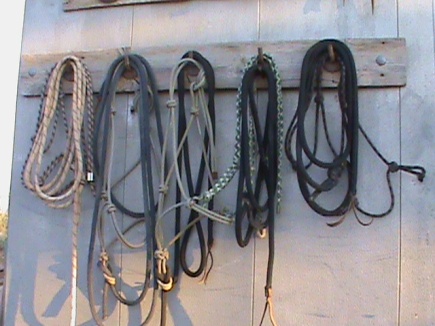
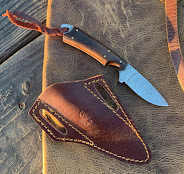
I have received several questions on one of the saddle's that I am riding in some of the videos I post. So it gives me a chance to plug Sawtooth Saddle Company of Vernal, Utah.


The saddle in these pictures is called the Santa Fe and based on a design that dates back to 1838.  It's a slick fork with a hard seat, a minimal, rounded skirt and really a joy to ride.  It weighs right around 27 pounds which helped me decide on this saddle as I did not have a really lightweight saddle for long rides or heading up into the mountains. 

This saddle is double rigged and has big brass rings for the front and rear cinches, turned stirrup leathers with five inch Brass Monel stirrups. The horn is rawhide with a leather cap and large concho. This is not a saddle I would routinely rope, dally and drag calves on, let alone heavier cows. If I was going to use this saddle for that I would put a horn wrap on it or just use some rubber dally wraps temporarily to help preserve both the horn and my rope. This saddle came with a realy nice leather bound Mohair cinch. My wife now has that cinch and I am using a fleece lined cinch which is my preference. Many rider's don't like the way I rig my cinch with the knot through the strap but if you'll notice the knot it is set ahead of where my knee and leg are so it is not an issue on this saddle or type of rigging.  


The Breast Collar attachment D rings are high enough on the saddle so the breast collar can ride where it needs to, above the chest and below the neck in the cleft so it doesn't impede the horse's movement or breathing.   


This is a very well made saddle. Everything about it shows superior craftsmanship. A person couldn't go wrong with a Sawtooth Saddle if their checkbook would allow the purchase. Visit the Sawtooth site and see their selection.


Wednesday, September 4, 2013

Helping Your Horse with Accepting the Mounting Block


Probably due to a combination of short people buying tall horses and older people with declining physical abilities it seems like many people need mounting blocks to get up in the saddle. And before you write me any nasty comments, I'm one of those people I wrote about in the first sentence,...short and aging. But I have fairly short horses, certainly no taller than 15.1 hands high which makes for mounting much easy.

However, it is necessary for many people to be able to bring their horse over to a mounting aid. It's also pretty common for a horse to lead up to the mounting block and when the rider's climbs the block, the horse will drift out to a position that the rider cannot mount from. I have noticed this in trail type competitions and many of the horses resist the rider's attempts to pull him over to the mounting block. This could be because the horse is not used to, or accepting of the rider towering above them,......don't ask me why being in the saddle is different,...... or the horse may simply be not immediately accepting of the mounting block which is a new obstacles for them.

The good news is that getting your horse to close the gap and stand next to a mounting block why you gain the saddle is a pretty easy thing to get your horse comfortable with.

Be sure your horse is comfortable with the mounting block as an obstacle. Lead him up to it, give him the time he needs to accept it,……it may take 2 seconds, it may take 30 seconds, it doesn't matter because your horse is not on your schedule, you're actually on his, but the point is to get him to accept that it's not a threat.

Lead the horse up to the mounting block and position where you can mount. Even if the horse stands for you to mount in this position, the position you put him in, I would still go through the process of cueing him to move his feet until he is parallel to you (siding up to you) so you could mount safely. This will be useful when you go to use a mounting block he is not used to.

So try this,....lead the horse up so he is perpendicular (facing) the mounting mount. Get on the mounting block and bump the lead line in a upwards, rhythmic fashion until the horse moves his feet. As he moves, even on foot or even leans to or looks to be wanting to move a foot, stop bumping - this is the release. Then begin again. Every time the horse moves his feet, give him a release (quit bumping the lead line). It's okay, in my opinion, that the horse moves in the wrong direction initially because he is learning the cue to move his feet. That's all you are really trying to do, get him to move his feet. You can use a verbal cue as well such as "over".

Do this a couple times and you'll most likely have a horse that automatically sides up to you when you climb onto the mounting block. Then you may have the issue of getting him to wait on you to ask him to position up.

Finally, be sure you are following safe mounting procedures from the mounting block,......don't settle for having your horse close enough to make mounting possible,......your horse needs to be close enough to make mounting safe. Have ahold of the reins, shorten the reins on the side you are mounting on just in case your horse moves out or even bolts, you will be prepared to tip his head and disengage his back end to a stop. Sit in the saddle and find your off side stirrup. Having turned stirrups make this much easier so your foot automatically finds the stirrup. Hope this helps.


Sunday, September 1, 2013

Horse Humor - Horse and Rider in Drive Through


Many people have seen this picture, reportedly taken at a Texas Whataburger, a State Institution by the way, but there was an actual account of a girl riding her horse through a McDonalds in England but was refused service as that McDonald's did not serve people on horses in this particular drive through.

So the woman dismounted and led her horse inside to order, where the horse "ended up doing his business on the floor" which is the polite British way of saying the horse pooped or otherwise dropped a load of manure.

A McDonald's spokeswoman said "the incident caused distress to customers and disruption for the restaurant, and the police issued the woman with a fixed penalty notice." She added: "The health and safety of our customers and staff is our top priority, and for this reason we are unable to serve pedestrians, bicycle riders or customers on horseback through the drive-thru."

Don't believe me, check it out here at the BBC News site.

If you are reading this you probably don't have a problem eating a biscuit with one hand and brushing a horse with the other. 


Monday, August 26, 2013

Horse Owners Preparing for Natural Disasters and Emergencies


This was sent to me with a request to share..."10 Rules to Live by in Evacuations with Horses from Wildfires or Natural Disasters". All good advice with the intent to get you to think what you would do in an emergency. My comments are in Italics.

1. TEACH YOUR HORSE TO LOAD (and tie)! And I mean ...immediately step into a trailer.
I have previously written and did a short video about blind fold training your horse which would be useful for moving them through some situations like fires.

2. Take at least one bale of hay and a BUCKET, you never know where your horse is going to end up.
Taking a water supply is a good idea as this will give you some time to find a water source as you re-locate. There are many options here with various space saving trailer water containers. I use 5 gallon military style plastic jugs and I always keep four of them full and loaded into my primary trailer and I have a collapible 55 gallon blivet for my truck which was intended to use to lay a wet line for grassfires, but could easily be a mobile water source for livestock. Having temporary panels or the ability to make a high-line to tie your horses to when you get some place safe would be something to consider.

3. No matter what, if you take your horses or not, MAKE SURE you take your proof of ownership/BRAND INSPECTIONS! This will help you prove the horses are yours later on! Photographs of your horses should work in non brand inspection areas.
I keep a file folder with all the vet records and current Coggins tests and Health Certificates on our horses. The new Coggins (EIA) test results will have profile photographs of the horse, as opposed to drawings, making recognition/identification/proof of ownership easier.

4. If you CANNOT TAKE your horse, TURN THEM LOOSE! They have great survival instincts, its better than dying in a locked barn.
I have a hard time envisioning a scenario where I have to turn my horses loose, then drive out to safety. I think that bringing your horses out by ponying them or hooking them into a pack string would be an option.

5. IF YOU TURN THEM LOOSE, write your phone number on them in some way! Spray paint/shoe polish, whatever you can find.
I never thought of this. Maybe a shoe tag with your contact info tied into their tail would work?

6. If you turn them loose TAKE THEIR HALTERS OFF! Imagine all the debris your horse is going to encounter! You don't want them caught on!
Speaking of halters, another thing to consider is ensuring halters and leads are close at hand if someone else has to evacuate your horses if you can't make it back to your property.

7. If you turn them loose, LOCK THEM OUT OF THEIR BARN/PEN/STALL/YARD. They WILL go back!

8. If you take your horse to an evacuation center, it is still a good idea to have your horse marked in some way. Sometimes evacuation centers have to evacuate!

9. If you take your horse in a trailer, PLEASE tie them if you safely can! I cannot count how many times we were evacuating and found a loose horse we needed to load with ours, if the horses are loose in the trailer that is a disaster waiting to happen.
I always keep a couple spare halters and a lariat iny my truck as well as in my trailer. I use a tie ring I developed to make it easy to hook and secure horses to D rings on trailer.

10. If your horse is in a large pasture area, cut the fence in corners and leave gates open! When horses can't find their way in smoke/debris they will follow fence lines.

For more info go the Colorado State University website and a printable Wildfire Preparedness for Horse Owners List.


Monday, August 19, 2013

Does Mecate Reins Affecting Balance of the Bit?


I received this question on the balance of a bit when using Mecate reins: "(I was) wondering about balance in the bit with one side having two weights of reins vs. the other with just a rein. Do you add a heavier knot/slobber strap on the side that doesn't have the get down rope?"

I'm sure there is a difference in weight coming off the bit ring or shank when using mecate reins, however I think it is pretty minimal and I don't think the balance is effected enough, as you will be using slobber straps so the weight of the slobber strap with the attached rein will be hanging off the bit ring or shank.

You asked if you can add a knot on the the off side to balance any weight difference. I don't see why not a knot (sorry couldn't resist that pun) but it is also common to see a shoo fly braided into the end of the mecate reins on the off side. On the picture of one of my horses with a snaffle bit, slober straps and a mectate eins, you see I have a little bit extra rope on the off side.
This wasn't done to balance the weight on the bit, it was for adjusting the entire mecate, from what I use for a continous rein and what length I like for the lead rope

As you use the mecate reins, the lead rope (or the get down rope portion) of the mecate rein will be suspended but secured at the free end, either to your saddle horn, through your belt, or coiled and tied to saddle strings. The lead rope (get down rope) should be loose (not taunt) so it should not be pulling on the bit.

The rider is going to handling the mecate reins therefore some of the weight on the reins is going to be taken up with this contact. Some of the weight of the bit is going to taken up by the horse's tongue as well. Again, I don't think balance this much of an issue. I cannot remember riding a horse in a mecate where the horse was verring to the left when loping on a loose rein.

Some people just don't like to use a mecate because of the additional rope (lead line portion) that they have to keep track of. An option here would be to ride with a small halter under the bridle with the halter lead line coiled and tied to the saddle strings. You could also use a get down rope that is tied fairly loosely around the horse's neck with the lead again coiled and tied to the saddle strings. Of course, this will negate one of the features of a mecate's lead tucked into your belt where if you come off the horse unexpectedly you would have a line to your horse to keep him from running off if he had a mind to. Just be sure to "S" roll your mecate lead or get down rope and tuck it into your belt so if you do come off your horse the rope will come out of your belt so you won't get drug if you can't get ahold of it quick enough.

Hopes this help. Safe Journey to you.

Thursday, August 15, 2013

Questions on Childen's Horseback Riding Lessons


Susan sent an e-mail with the following question. "I found your website as I am researching everything about horses, as I know next to nothing about them. I have my 10 year old daughter taking horseback riding lessons, one hour twice a week. In three weeks she has not yet begun to ride a horse, all she is doing is cleaning horses. Do you have any guidelines or suggested sites for riding lessons, specifically lesson outlines?"

Hi Susan, I think by the time you read this your questions will have been resolved. I am assuming you did some research on your riding instructor such as talking to other parents or maybe you were directed to this instructor from a prior student. Maybe you can ask your daughter's instructor for a lesson guide or schedule. Or maybe better yet, just ask the instructor how you daughter is doing. Is she comfortable around horses? Is she absorbing the lessons she has been taught so far? And while she has not sat a horse yet, she should be learning a great deal about horse care, horse behavior, and above all, safety around horses. So, I don't necessarily think that it is too odd for a child, new to horses, not to ride right off the bat.

My wife, her name is Susan also, taught horsemanship to children for a number of years. We always said that she was not teaching riding, but teaching the next generation of horse owners. If your daughter's instructor is anything like my wife, then I would think that in three week's your daughter has probably been exposed to safety around horses, putting on and leading a horse in a halter, feed and water requirements and how to feed a horse, grooming a horse, cleaning hooves, horse anatomy, horse health issues, and probably been given a few demonstrations on how horses act and react to different things - all the while becoming more comfortable around horses.

I don't think there is a timeline set in stone for children. Maybe the riding instructor is reading your daughter like the instructor reads a horse, determining when being ready is. Having said that, I think your daughter will probably be horseback by the time you read this. And I just bet her first few rides are bareback or with a barepack pad. I would like to her back on how your daughter is doing.


Thursday, August 8, 2013

Reader's Questions on Caring for Horse Feet

SimCat wrote in to ask "just how often (really) a horse's feet need to be cleaned."

For me, inspecting my horse's feet and cleaning them when necessary, is dependent upon the environment they are in. During the rainy season when they often stand in wet dirt, I'll inspect and clean them more often. Even in the dry parts of the year, which is most of the year here in West Texas, I reckon I do not go more than a week without picking up and looking at their feet.

We recently finished the "rainy season" here, recieving a total of about two inches of rain over a few weeks. Enough rain to make the corrals wet, some standing water and mud for several days in a row where I picked their feet sometimes every day and applied Kopertox is needed to combat the pre-thrush condition. Picking the feet exposing the bacteria to oxygen is usually enough to fight the pre-thrush condition, but sometimes one, maybe two treatments of Kopertox or Thrush Buster is necessary. 

I always look at the feet before riding to see if a shoe is loose or to look for any foot injuries. I do not clean the hooves prior to riding, instead allowing the dirt and manure packed into the hoove to help protect the hooves for that ride, but I always clean the feet after a ride and before I turn a horse back out.  

Tina wrote and asked "if I ever used plastic hoof packing to protect my horse's feet when riding in rough areas."

No Tina, I have not.  The horses I take into rough areas are wearing shoes.  I have had my horseshoer use a urethane product to fill the concave portion of the hoof, then a pad to keep it in place, then nailed on horsehoes to help dropping heel bulbs on one back leg, but I have never used this or other plastic or rubber products to cushion a horse's hooves for rocky or rough ground.  I suppose it could be or has been done.  But it's a lot of effort.  You have to ensure the hoof is dry and some people will use a heat gun or butane torch to do so.  Hoof boots may be a better solution and they would be re-useable for continued riding in the terrain you are concerned about.    You can find some examples of hoof boots at EasyCareInc.com
    

Sunday, August 4, 2013

Jaguar spotted in the Southwest U.S.


New photographs show that a rare male jaguar apparently has been roaming in Southern Arizona mountains for at least nine months, indicating the animals are occasionally moving into their historic range from northern Mexico and into the American Southwest.

The Arizona Daily Star reports that remote cameras have photographed the big cat in five locations in the Santa Rita Mountains' eastern flank on seven occasions since October. Those photos were taken for the U.S. Fish and Wildlife Service by University of Arizona cameras after a hunter gave state authorities a photo of a jaguar's tail that he took last September in the Santa Ritas.

The images were provided to the Star this week by U.S. Fish and Wildlife Service in response to a Freedom of Information Act request.

Federally financed remote cameras photographed the jaguar west of the proposed Rosemont Mine site in the mountains southeast of Tucson. It is the only jaguar known to live in the United States since the 15-year-old cat known as Macho B died in Arizona in March 2009.


The photographs come as federal wildlife officials consider designating more than 1,300 square miles in New Mexico and Arizona as critical habitat for the jaguar.

The proposed habitat would include parts of Pima, Santa Cruz and Cochise counties in Arizona, and New Mexico's Hidalgo County.

While this habitat isn't as good for jaguars as what exists in Mexico, said Jean Calhoun, an assistant field supervisor in the U.S. Fish and Wildlife Service's Tucson office, "It's the best (jaguar) habitat we have."

Tim Snow, an Arizona Game and Fish Department nongame specialist, said the area where the photos were shot has prey for the jaguar like deer and javelina. But the new photos don't change the state Game and Fish's opposition to a jaguar critical habitat.

"That solitary male jaguar is no reason for critical habitat. We don't have any breeding pairs," said department spokesman Jim Paxon. "If that was critical habitat, we would still be doing the same thing that we are doing today. We are not harassing that jaguar or modifying normal activities there that are lawful today."

Michael Robinson of the environmental advocacy group Center for Biological Diversity, however, said a habitat is needed in American Southwest. "It's hard to see how an area with possibly the only jaguar living in the wild in the United States ... how that habitat would not be essential to recovery here," he said.

Warner Glenn, the author of Eyes of Fire, rancher, mountain lion hunter and conservationist, was the first to photograph a wild jaguar in 1996. Jaguars were thought to be gone from the Southwest until he saw a live one in the Peloncillos Mountains, near the New Mexico border with Mexico, on March 7, 1996.

In many ways, Warner’s photographs of a wild jaguar in 1996 were the spark for the last decade’s research, camera traps and conservation struggles over the jaguar; all lovers of these lovely cats owe him a huge debt of gratitude. Warner is on the Board of Directors of the Malpai Borderlands Group and has seen wild jaguars in the US twice.

“He did not run,” Mr. Glenn said. “He was not afraid of anything.” Later he estimated that the jaguar, by the look of his teeth, was eight or nine years old and weighed nearly 200 pounds. Mr. Glenn named the cat Border King.

Another jaguar is now being tracked and photographed in southern Arizona by Jack Childs, a rancher and lion hunter from Tucson. Mr. Childs first videotaped the animal, which he nicknamed Macho B, in August 1996 in the Baboquivari Mountains. It left the region that year but came back in 2004, where it now wanders along the border.


Wednesday, July 31, 2013

Tracking Questions from Readers


"When measuring stride length, do you go from the heel of one print to the heel or toe of the other print?"

I measure stride length from the toe of one print to the heel of the next. Using a stride stick, also called a tracking stick, I can mark the stride length I'm tracking and if I can't find the next sign easily, the arc that the stride stick makes from the toe of the previous track narrows down where to look for the next sign. My stride sticks are 1/2 inch oak dowels, 36 inches in length. You can make one in the field with any decently straight stick at least 18 inches in length.  You can mark measurements by making notches on the stick.


And what am I looking for? Any flattening, disturbance, regularity or color change.

Using a rubber band or a tight fitting rubber washer is a good way to mark the measurements on your stride stick.  With more rubber bands or washers, you can also measure and mark width in the ball of foot; heel width or length for broken heels or raised heels. Half inch rubber washers will last longer than rubber bands and are easier to move when changing measurements.

In the picture below it appears that I am measuring from heel to heel, but look for the black rubber washer on the stride stick. It is located at the top of the print in front of me (see arrow). The end of the stick now can create an arc so I know where the next stride should be.


It's six of one, half dozen of another if you measure heel to heel or toe to heel. I was taught, 30+ years ago, to measure from toe to heel so that's how I do it...........oh, and sorry for taking three paragraphs for a question that could have been answered in one sentence.


"Can you go into more detail about "Pressure releases" and why or how they are important to tracking?"

When an object such as a human foot or animal hoof hits the ground, it disturbs the ground. It may be so subtle as to be undetectable by the naked eye, but it can compress, or gouge, or leave a regularity such as pattern or a line not seen else where. Disturbed dirt and bruised vegetation can provide a color change to indicate passage.  This is the flattening, disturbance, color change or regularity I'm talking about.

As the foot or hoof pushes off to leave the ground, that release also impacts on the disturbance left behind,  much more so in softer ground than in rocky, hard ground. The weight, speed and angle of the foot or hoof leaving the ground also influences what that pressure release looks like, often providing a clue as to what the human or animal was doing.....increasing stride and therefore speed, jumping side ways, stopping abruptly, looking up, moving with a leg injury, and getting tired are some things you can often tell from reading a pressure release.

So to answer your question, reading pressure releases are not critical to being able to cut sign or track. It just gives you more insight to your target, it's condition and what it may be thinking or doing.  Just one of many factors to consider.

Saturday, July 27, 2013

What to Look for in a New Horse


Kirk wrote in and asked: "Can you provide some tips or detail what you look for when 'shopping' for a new horse? Once gender, size, breed is determined, what do you specifically look for? Reason for asking, my first horse purchase was less that great, which taught me some great lessons. The horse has an incredible mind, but has limitations on his front end -that's for another question on another day."

Great question Kirk,...I don't know if I can begin do justice in answering it. One of the best places to get a really good young horse is the numerous ranch horse sales. Ranches such as the 6666, Pitchfork, Haythorn, Wagon Wheel, WYO, and a host of others will sell off geldings that they have been using (and training) to the public. These ain't your local sales barn horses. However, making to one of these sales may not be possible for most people. There are many production horse farms that breed for performance events such as reining, cutting, etc. So barring the option of buying from a ranch horse sale or from a large breeding operation, that leaves buying from a private owner or a small horse operation.

First question I'd get an answer to is what do I want to do with a new horse. Am I looking for just a trail -pleasure horse? Maybe a stout, solid horse that can take me up into the mountains for hunting and maybe packing? Is this going to be an arena roping horse? What you want this horse to do should not only impact on the size and chacteristics of what you are looking for, this horse but it's breed as well. Color is way down the line, but it's nice to get a good looking horse.  So I think purpose comes before gender, size and color.  

A Vet check on a prospective purchase and having your farrier look at the horse's feet are good things to do if they are available and if you can pay for it.  AVet check can reveal things like subtle chronic lameness or previous injuries doing a flexion test on the horse's legs.  Maybe you have a knowledgeable friend you can take along to look at prospects - a second set of eyes can help you make a better decision.

I had a Vet Check done on a roping horse prospect years ago.  The vet told me the horse has a heart murmur and he recommended against purchase.  I was convinced that the horse's problems were associated with a lack of nutrition, so against the Vet's advice I bought him.  One of the few times I kept my own counsel and it paid off.  That horse was Roy who I unfortunantly lost to a broken leg not too long ago.  He's the horse in the foreground of the picture above.

The second question I'd ask is why that person is selling the horse. Listen closely to what they say and don't say when you ask this question, and, unfortunantly you will have to read between the lines and take the answers with a grain of salt in most cases.

Some times you can get a great horse that was originally purchased for children who no longer ride, or the owner got too old or has physical problems that don't permit riding anymore....or in today's market, the owner can't afford to keep a horse anymore.

Visually when I looking at a horse I start looking at the overall conformation. What the general body score is. The head being proportionate to the body; not too long or short of neck; the neck not tying in to the chest way too low or too high; what the withers look like - they could be practically non-existant or of medium height or even really high; the length and straightness of the back. Does the overall look of the horse, including his teeth, match which what I am being told the age of the horse is.  Is there any evidence of previous injuries. 

I look at the front and back ends to see if the horse is too narrow based and if the horse looks to be knock kneed or bow legged. What does his hip and overall muscularity look like.

What does his feet look like? Is there too sharp or too narrow of an angle from pastern down the front of the hoof. If so, is this because he was trimmed too long in the toe or did the leave too much heel.

Dished or concaved hooves may be a sign of previous founder and therefore some internal hoof issues that may make him unsound for what you want him for. Is the hoof flaring at the bars? Does the hoof and frog appear to be balanced? What do the hoof walls look like? Are they really thin or do they have a healthy thickness. Sometimes, if a horse is on non-consistent and/or low quality feed the hooves will grow down from the cornorary band with ridges. Speaking of feed, poorly fed horses can be a lot different once they get regular, quality feed.

If everything else is acceptable on the horse except maybe feet in poorly maintained condition, sometimes conistent and good quality feed, and good farrier care, can fix that within 9-12 months. All these considerations is why sometimes paying a farrier to check out a prospect horse can pay off. There are some foot problems that can be migitated with good farrier care and can make that horse functional for you, but there is only so much even the best farrier can do and they can't fix conformational defects.

The owner should allow you work work the horse on a lunge line or in a round pen, and ride the horse. It would be a good idea to find out what Veternarian and Farrier have seen this horse and ask them what they think of this horse.

I would ask to see Vet records on this horse. Owners who don't regular vaccinate or worm their horses maybe be giving you a horse that is going to cause you problems real soon.  Having said all of the above, I like a stout, shorter horse in the height range of 14.3 to 15.1 hand high with a short back, and I prefer geldings that are bays or sorrels. 
Good luck to you Kirk. I'll leave you this little of bit of truth in humor.


Tuesday, July 23, 2013

Train or Ride Your Horse?


Shari wrote to me and said that she was riding with a small group of friends and someone in the group mentioned that is not always wise to train your horse, that sometimes it is better for the horse just to have an easy ride. Shari asked me if this is something I subscribe to and if so, do I have a schedule or recommended ratio of time of training to just riding time.

I don't differentiate riding and training,.....at least I don't think I do. I think that everytime we are with our horses it is some type of training, whether we are on the ground, leading them on a halter, or being on horseback. How can it not be?

Lets say you take your horse out for a short trail ride with no intent to do anything but just enjoy being horseback. Wouldn't you still correct your horse if need be? And if he doesn't need any correction, wouldn't you be reinforcing whatever he was doing right, be it stopping, or backing, or moving his hind or front end over, side passing, etc.

Maybe you don't have time to ride one day so you are just in your horse's pen asking him to move over while your pick manure,...asking him to back up as you throw feed, ....maybe you are askimg him to drop his head while you put on or remove a fly mask. This may all be things our horse does well but still has some element of training or reinforcing behavior.

I think that person you were riding with meant, more or less, that you have to be careful not to sour your horse, which I whole heartedly agree with.

Imagine a barrel racing horse that when out of his pen only does barrel patterns at full speed. Nobody could blame that horse for being a little sour and not be looking forward to coming out of the pen if all they did was run barrel patterns.

I knew a 20+ year old horse that was yanked out of his stall Friday and Saturdays nights to be trailed to local ropings where two young guys would get 8 or 10 runs each off the same horse. Then that horse would be trailer back to put in his stall for the next 5 days and the routine would start a over again. This was not a fair deal for this old horse. Pretty soon that horse associated getting in the trailer with the work that followed and became trailer resistant.

In fact, I would think that a change up of routine does a horse good. A trail ride for a hunter -jumper, team sorting for dressage horse, obstacle training for a roping horse, etc. Call it cross training, I think it all help those horses become better, safer horses.

Even when you do ride it doesn't mean that each and everytime you work that horse until he is all tired and sweated up. I think you can do good things for a horse's mind by stopping short as long as it's on a good note, even if it is a 10 minute ride, then put him up for the night. I think this gives that horse a release and keeps him fresh, both his body and mind. This can simply be pulling the horse from the stall and grooming him then putting him back.

There is nothing wrong with, and everything right with a easy trail ride, but it still offers many chances to re-inforce some aspect of training and behavior,....two tracking around obstacles, a turn on the forehand, walk to trot transitions, reacting to neck rein pressure......really about anything. You don't need to make it a big deal. I am not good enough to produce a finished horse in my lifetime, although I am sure as heck enjoying the journey (most of the time) as will continue to as long as I consider what's fair for my horses.

I hope this made some sense Shari. This was one of the harder things to articulate. I think you are thinking what's best for your horse so you'll do just fine. Safe journey to you.

Wednesday, July 17, 2013

4 Men, 13 Horses and 3,000 Miles - The Unbranded Project


If you haven't been keeping up with this incredible journey you are missing something you may never see again until the Unbranded Documentary Movie is produced.

This is a story of four amazing young men, Jonny Fitzsimons, Ben Thamer, Thomas Glover and Ben Masters and 13 Mustangs traveling 3,000 miles from Arizona through Montana and planning to arrive at the Canadian border in September. This is through some of the roughest terrain you can find. Currently they have covered about 2,000 miles of the planned 3,000.

You can follow this adventure and see the lessons they learn on the Unbranded Blog hosted by Western Horseman. The pictures are awesome. There is also a very good article on these men and their project in the May issue of Western Horseman.

The video below is a teaser on the movie project, Unbranded The Film.


Friday, July 12, 2013

Senate-Passed Farm Bill Excludes Veterinary Amendment

by Dr Ashley Morgan, Assistant Director, Governmental Relations Division, American Veterinary Medical Foundation (AVMA)

In early June, U.S. Sen. Jerry Moran (R-Kansas) and Angus King (I-Maine) introduced the Veterinary Medicine Mobility Act as Senate Amendment 1144 (SA 1144) to the Senate’s version of the Farm Bill. Though the amendment did not ultimately get included in the Senate’s final version of the Farm Bill , it did gain more attention among the senators, successfully garnering additional endorsements by Sen. Patrick Leahy (D-Vt.) and Sen. Debbie Stabenow (D-Mich.). On June 17, Sens. Moran and King reintroduced the bill as S. 1171.

The Veterinary Medicine Mobility Act aims to amend the Controlled Substances Act (CSA) to allow veterinarians to carry some medications—used for pain management, anesthesia or euthanasia—beyond their registered places of business. The Drug Enforcement Administration, which enforces the CSA, has called for a statutory change to fix the law, but until then, the agency continues to inform veterinarians in several states that they are not permitted to carry their controlled substances beyond their registered locations and are in violation of the law, leaving veterinarians concerned.

Adding to the confusion, AVMA learned that DEA’s Congressional Affairs Office had actively informed Congressional offices on Capitol Hill in May that the amendment was unnecessary. DEA purported that they already allow veterinarians to transport and dispense controlled substances wherever they need to within states within which the veterinarians are licensed. This message is a contradiction to what the AVMA, state veterinary medical associations and many practitioners have been told by the DEA’s Office of Diversion Control and DEA field offices. And, as recently as early May, DEA field offices have continued to inform veterinarians that they need to register farms where they want to dispense and administer controlled substances.

In addition, DEA’s Congressional Affairs Office has not clearly articulated to veterinarians how they should handle registering their controlled substances in states where they are licensed to practice, but do not have a principal place of business, such as a veterinarian who lives on the border of a state and may, in fact, practice in two states. This is an issue that requires clarification and remains of utmost importance to the

In response to DEA’s recent communications, AVMA’s Governmental Relations Division requested a meeting with the DEA in early June to clarify its stance on the issue, but the meeting has been denied. Similarly, U.S. Rep. Kurt Schrader (D-Ore.) is joining with several other members of Congress in a request for information from the DEA on this issue.

Given the continued confusion as to how the CSA should be carried out, AVMA continues to support legislation that will remove all ambiguity and will provide better clarity to veterinarians who need to use controlled substances away from their principal places of business.

We ask that you remain engaged on this issue. Please contact your Representative and Senators in support of the Veterinary Medicine Mobility Act (H.R. 1528 / S. 1171) if you have not done so already, and urge your colleagues and clients to do the same.


Sunday, July 7, 2013

Horse Slaughter Approved


Writing and posting articles like this wins me no friends.  From my ranching friends who think wild horses and burros need to be treated as varmints and destroyed, to other friends who think wild horses and unwanted domestic horses should be cared for until a natrual death,.....no matter what the cost.  I think the solution is in the middle.  We need a way to humanely put horses down - that means kind and gentle to yet another group of my friends who don't read nor write very well.   I wish all horses could have a fair life and a natural death, but that is just too unrealistic.  Especially in a battle for dwindling resources - land and money.  

The Associated Press is reporting that Federal officials have cleared the way for horse slaughter plants to begin operations once more by granting a Roswell, New Mexico company's application to convert it's cattle processing facility into a horse processing plant. The next step is for the U.S. Department of Agriculture to send inspectors to the plant.

While the U.S.D.A. has granted this request and have requests from other proposed horse slaughter plants in Iowa and Missouri, the U.S.D.A. is moving forward with a a push for an outright ban on horse slaughter, and the Obama administration's budget proposal for the upcoming fiscal year eliminates funding for inspections of horse slaughterhouses, which would effectively reinstate a prohibition on the industry puting us right back where we started seven years ago when funding for inspectors was removed therefore shutting these plants down.

The slaughter of horses to produce meat for human consumption and dog foods is an emotional issue on both sides.

Supporters of horse slaughter stand by a Federal GAO report from 2011 that contend that horse abuse and abandonment since horse slaughter was banned have increased. Mainly from people who have a increasingly hard time with the financial burdens of horse care and management and simply have no recourse to euthanize their horses. Most people won't shoot their horses and the costs for a Veternarian call and euthanasis begin around $200.

I wrote about a big case of horse neglect here in the El Paso area some time ago. It was an atypical case where I believe a few grubby, unsrupulous people tried to turn a profit on shipping a large number of unwanted horse to Mexico for slaughter and once they ran afoul of government and animal health regulations and delays which cost them unanticipated fees for holding pens, they just turned these horses out to fend for themselves in desert areas without feed nor water. Without a horse salughter option in the U.S. we'll see more of these dirt bags in the future.

And while it would also be honest to say that people who can't afford to provide a fair life to a horse shouldn't own one, most of these horse owners don't set out mistreat horses they just get into a financial position where they can't afford to provide a fair life to a horse.

Opponents to horse slaughter point to the often inhumane treament for horse bound for domestic horse slaughter, from the sale barn, through transport to euthanizing these horses. Furthermore they point to drug laden and other wise tainted meat from these slaughtered horses. Among the opponents are the Humane Society of America, Front Range Equine Rescue and the America Wild Horse Preservation Campaign.

New Mexico Governor Susana Martinez, a self described horse lover, who I highly respect, said "creating a horse slaughter industry in New Mexico is wrong and I am strongly opposed." As much as I love horses there simply has to be a method to dispose of unwanted, unmarketable and older horses. This process has to have the priority of treating these horss fairly and humanely from sale to transport to slaughter. It is not feasible to provide natural end of life care to all these horses.

I am more so in the camp of New Mexico Land Commissioner Ray Powell, a veterinarian, who is calling on local, state and federal leaders to "work together to create solutions and provide sustainable funding to care for or humanely euthanize these unwanted horses. Continuing to ignore the plight of starving horses, creating a new horse slaughter plant, or exporting unwanted horses to Mexico won't solve this problem."

If you have seen the current situation like I have, horses jammed into stock trailers heading to Mexico for an inhumane death but not before they are starved and mal-treated, then you may start to think about horse slaughter being necessary, albeit in a humane process from start to finish.


Thursday, July 4, 2013

19 Hotshots Gave The Last Full Measure


On the 237th Birthday of this Nation it is fitting to remember the type of Americans who risked all to create an idea that a cause if worth dying for.  Our most recent losses of this type of spirit are the nd and those are In Memory of the 19 Lost Hotshots Most of the Nation has heard or read about the 19 Hotshots who perished fighting a wildfire near Yarnell, Arizona on Sunday 30 June 2013. This was the single greatest lost in wildlands firefighters in 80 years.


The 19 men were out building a fire break with hand tools on one flank of this lighting sparked fire when strong winds from a thunderstorm suddenly turned the flames back in their direction. They apparently were overtaken by flames in a matter of seconds before they had a chance to seek shelter. The wildfire killed 18 of 20 members of the Granite Mountain Hotshot Crew. The 19th dead firefighter was from another group.

The Hotshots are elite teams of firefighters who march into remote wildfires to battling raging wildfires that threatened people and property. These are volunteers who must pass a selection and recurring training courses not only to be accepted but to remain on the teams.  The Hotshots are simply some of the best this Country has to offer.

As a Army Range Rider I had to deal with wildfires in the BLM grazing units. The largest fire I
worked was about 6,000 acres destroying not only cactus, yucca but fences, waterlines and the grass
that ranchers counted on and threatened cattle as well.  I had another Army Range Rider and two
BLM Cowboys working to control this fire, as well as a two man Fire Brush Truck from the nearest
Fire Department laying down a wet line when we determined we would not be able to control the
spread of the fire.  I requested help on US Forest Service radio and requested a Hotshot Crew on
scene. A couple hours later, through the smoke from the fire I saw the line of yellow jacket wearing
Hotshots approaching our fire from the opposite end, and just like a choregraphed dance they split
into two units and went directly to containing the fire.  They had walked in the last several miles
and with nothing but what they carried, then they put this growing fire out and were ready to go to
the next one.   It was impressive to say the least.


The Yarnell fire in Arizona which cost these Hotshots their lives has burned through 8,400 acres and
none of it is contained as of Tuesday 2 July. There are 18 engines, eight support water tenders and a
total of 500 personnel on the scene. An estimated 200 homes and other structures burned in Yarnell.
A heavy toll of property and an unbearable toll of lives especially for the families who lost fathers,
husbands, brothers and sons. 


The fallen have been confirmed: Eric Marsh, Anthony Rose, Kevin Woyjeck, Chris MacKenzie, Scott
Norris, Clayton Whitted, Travis Turbyfill, Jesse Steed, Robert Caldwell, Dustin Deford, Sean
Misner, Scott Misner, Garret Zuppiger, Travis Carter, Wade Parker, Joe Thurston, John Percin,
William Warneke and Grant McKee.

Please keep their families in your prayers.

Tuesday, July 2, 2013

Mechanical Hackamores or More Control?


Kacie made a comment on a post concerning Bosals and Hackamores: "I have borrowed a mechanical hackamore to try on my Haflinger. I am riding her in a wonder bit now. She plow reins and you really have to keep some hard pressure on her mouth just to keep her along the side of the road. She also can be ridden around the yard and drive way in just a halter and lead. So I am hoping that with this mechanical hackamore that I can get more control with less pressure as I normally have such as bad neck and shoulder pain from the pressure applied in her mouth the with whole ride. "

Kacie, you should NOT be experiencing pain in your neck and shoulders from managing your reins. This is mostly likely from fighting with your horse to direct her head, or trying to control her hed tossing as she is demonstrating a high level of discomfort with the bit.  I don't need to tell you that this makes for a miserable ride for both you and your horse.

I am not a fan at all of gag bits which it what your wonder bit is, upon rein pressure the mouthpiece will slide up further into the horse's mouth. These wonder bits come with many different mount pieces from a broken bit, like a snaffle mouthpiece, to one piece twisted wire of loose chain mouthpieces.

Sometimes when a rider has an issue with control it is not necessarily a good idea to go to a harsher bit or a device like a mechanical hackamore which can cause the horse greater pain. Lack of control may be from the horse trying to avoid the pain. I wonder if your Halfinger mare is bracing for the envitably pull on the reins and pain in the mouth. There could be a number of problems with your mare, and to be frank none of them her fault. The bit could be seated too deep, giving her no release when the reins are slack; could be a bit that is too loose and banging around on her teeth or bars; it could be she is just green broke to a bit in her mouth.

I also wonder if you have any issues with her when you ride her with a halter and a lead line. If she is okay with this maybe you can try a side pull, which is a bitless bridle with a noseband, where the reins attach to the side. 
While most of the side pull bridles will have a rope noseband, stiffer than a rope halter and therefore a little more harsher which will to aid in the pressure the horse, there are side pull bridles available that incorporate a snaffle bit to help the horse get used to carrying a bit and receiving pressure from the bars, mouth and tounge.  This would allow you to give clearer signals when "plough reining" or direct reining and work to be more subtle or lighter in your rein cues.

The mechanical hackamore can be a very harsh piece of equipment as it has a nut cracker effect between the noseband and the curb chain under the jaw. I have seen nosebands of mechanical hackamores range from plastic tube covered chain or wire to stiff rawhide. Usually mechanical hackamores have a significant shank where the reins connect providing the rider with a great deal of leverage. This can be a disaster for a green broke horse and/or a rider with left than soft hands.

What I would do is basically start her over in a snaffle bit and work her in round pen or arena.  If you are soft with your hands and provide clear signals, she ought to learn quicky to carry this bit and understand your cues.


Tuesday, June 25, 2013

Anniversary of Lt Col Custer's Last Stand


The Battle of the Little Bighorn, usually referred to as Custer's Last Stand, occured 137 years ago today on June 25th 1876. This battle has been made famous through many books, a few movies, and still retains many myths.  Hands down, the best book on the subject is the recent work by Nathaniel Philbrick called "The Last Stand: Custer, Sitting Bull and the Battle of the Little Bighorn".

The U.S. Army in the midst of the Plains Indians Wars sent several columns of Cavalry and Infantry to fix and destroy the Indians. Custer, for reasons probably pertaining to his vanity or ego about sharing what he thought would be glory and probably some disrespect for the Indians ability to fight a fixed battle, located a large Indian encampment on the Little Bighorn River the morning of June 25th 1876 and despite warnings from his Crow Indian Scouts concerning how large and therefore how many warriors he faced, Custer decided not to wait on the other columns, but to attack, fearing the element of surprise had been or would be lost.

The village the Crow Scouts spotted consisted of Lakota (Sioux), Northern Cheyenne and Arapaho warriors, women and children led by Crazy Horse, Chief Gall and Sitting Bull. Custer divided the 7th Cavalry, which consisted of 12 Companies into three forces: Three companies (Co A, Co G and Co M) under Major Marcus Reno; three comapnies (Co D, Co H and Co K) under Captain Frederick Benteen; and kept five companies under his own command (Co's C, E, F, I and L). The 12th Company, Co B, was commanded by Captain Thomas McDougall to guard the pack train and supplies.

Custer sent Major Reno to attack the Indian camp from the East and draw their attention while Custer rode around North of the camp to attack the camp from the rear (the West end of the camp) and prevent the Indians from escaping.

The Indians had no intent on escaping, even if they did, the warriors would have fought until the women and children were able to withdrawal. Major Reno was unsuccessful in pentrating the camp and was driven back sustaining heavy casualties. Lt Col Custer was discovered trying to circle the camp and was engaged on the move until heavy Indian forces pinned the largest portion of his command on a hill known as Last Stand Hill.

It was here that the majority of Custer's force, approximatley 210 men, were killed. Total casualties for the 7th Cavalry were 268 killed and 55 wounded out of a total force of 700 men. ...a stunning loss for the Army and a great victory for the Lakota, Northern Cheyenne, and Arapaho. A big loss for the Custer family as not only did they lose George Custer, but Custer's brother, brother in law and nephew were also killed.


Of course, the story of the Battle of the Little Bighorn would not be complete without the story Commanche, the mount of Captain Miles Keough who died with Custer. Commanche a veteran Cavalry horse was wounded several times by bullets and was found one or two days after the battle, badly wounded, but nursed back to health by surviving members of the 7th Cavalry. He has often been referred to as the only survivor of Custer's Last Stand, which wasn't true as there were other horses found alive. Commanche was described as a 15 hand Bay gelding, who like beer by the way, and was retired after overcoming his wounds, only to be used for cermonial purposes. Commanche died 15 years later and remains today perserved in a environmentally controlled glass case at the University of Kansas.


Saturday, June 22, 2013

You and Your Horse Shoer


I received an e-mail from kcadle about horseshoers. "Sir, I have an issue with my horse shoer. I am using a different horseshoer than the woman who place I keep my horse at. My shoer wants me to be on a six or seven week schedule which I don't necessarily agree with. My other problem with him is that sometimes he gets mad and whacks my horse. The woman who owns the barn tells me that I should get a new shoer. This is my first horse so I haven't much experience with horseshoers. Can you help point me in the right direction? Thanks. kc"

Howdy kc, I'll try to give you some things to consider and my opinions on a horse owner to horse shoer relationship. First of all this is a two way relationship. Yes the horseshoer works for you so you can fire him/her if you need to, but on the other hand the horseshoer may ask you to find yourself a different shoer if he/she feels you are asking him to do things he can't do or doesn't think should be done as that horse's feet and as it relates to his soundness and performance. The way that horse is trimmed or shod is a reflection of the shoer's competency.

Keeping your horse on a schedule is pretty vital to your horse being as sound as possible. My shoer comes in every six weeks during the warmer months and every eight weeks during the coldest months, as hooves will grow slower during cold weather. I have known horse owners who think they can skip a session and pick back the next scheduled session. This is a lose lose situation for the shoer as that horse is now walking around on feet that are getting too long, or flaring too much and that shoer risks someone seeing that horse and asking "Hey, that horse's feet don't look so good. Who is your shoer?" Do you think the owner is going to admit being negligent and leting his horse go 12 to 16 weeks without attention?

So the best deal for the horse is regulary scheduled trimming or shoeing. I would beware of the horseshoer who does not want to keep to a regular schedule, be it 6, 7 or 8 weeks.

As far as the shoer "whacking" your horse,....I think it is legitimate for a horseshoer to be up underneath that horse with a foot up and get a little upset when that horse truly tries to pull that foot away. I use my voice when a horse tries to take back a foot when I am cleaning, but have occasionally used my open hand slap that horse's butt to get his attention when he is impatient. Not much of an alternative since you shouldn't let the horse have his foot back as it teaches him and that he can take it back when he wants. Anyway, getting their attention should not be done out of anger.  Timing on correcting the horse is so important.  If that horse succeeds in pulling his foot then there is nothing to correct now except picking the foot back up and not letting him pull it away when he wants. 

Nobody should stand for anyone mistreating a horse.  One my Border Patrol friends fired their horseshoer, and rightly so, when he tried to hit a horse with a rasp.  This same shoer was fired by another friend of mine when he actually hit a horse with his rasp leaving a cut.  And I have fired a equine dentist when he tried kicking my horse in the belly for moving around too much - the dentist didn't give the horse enough sedative so the horse took exception to him being in his mouth with a file.    

But the horse trying to pull his foot back is not the horse's problem - it's the owner who should have made that horse safe and compliant for trimming and shoeing. Probably the biggest complaints from horseshoers, other than not getting paid on time, is that some owners think the shoeing they are paying for also includes training that horse.  So if you think about it, why should a shoer get paid the same for a solid horse that stands still, as he does for a horse that tries to pull his feet away, can't stand still and make it rough on the shoer?

Other common complaints from horseshoers are horses who continually move around, swishing their tails and hitting the shoer, and owners who make excuses for their horse's behavior. 

I think that in the best case you have a shoer who is patient with you and your horse; explains what he doing and why; sets a schedule with you, shows up when he is supposed to, and his work results in a sound horse. If you pick up and clean your horse's feet daily or almost daily, not letting him pull that foot away from you, you'll soon get your horse good about standing for shoers and that will result in an appreciative horse shoer,.....and a horseshoer who won't get into a position where he thinks he needs to whack the horse.

You  start by picking your horse's foot up and when he relaxes it, you set it down.  Even if this is just for a couple seconds.  Then build on that.  Pretty soon you'll have a horse that picks his feet up to give to you when you ask and stand quiet while his foot is being cleaned, trimmed or shod.

One other thing - many people are prone to dropping their horse's foot when they are done with it.  I like to give him a little warning by moving the foot towards the ground before I let go, or otherwise place his foot on the ground.  I think that if you just drop his foot when he is relaxed, the horse will soon learn to keep tension on his foot and misjudge when you are releasing it.  Dropping it when you are on a concrete shoeing stand can also chip up the hoof,...plus it's just kinda not fair to the horse. 

Good luck and safe journey.


Monday, June 17, 2013

Handgun for an Old Cowboy


I recently received this question from Walt about a suitable handgun for snakes and for personal defense:     "I am 63 years old and live by myself about 9 miles outside of town with my two horses. I keep my horses both in a corral next to the house and sometimes turn them out into a three acre fenced pasture. I saw a rattlesnake there two weeks ago. I ride three or four times a week up into the small mountain range north of my house. Saw another rattlesnake on the trail there. Lately I have had several vehicles come up my drive, two in the day time and one at night then turn around and leave. There have been some breakin's at some of the neighboring homes. The only gun I own is an inherited .32-20 Winchester rifle.  I don't even have a scabbard for it and probably wouldn't carry it most of the time.   I'd like to get a handgun both for two legged and no legged critters. Do you think it is reasonable to get a revolver in .32-20 or should I be looking to a different caliber? I don't want a automatic. Adios, Walt. "

Hey Walt, yes there are .32-20 caliber handguns. Smith and Weson as well as Colt manufactured single and double action revolvers in .32-20, also called .32 WCF. Smith and Wesson manufactured the Hand Ejector model double action revolver, while Colt made single actions on the 1873 pattern, as well as double action revolvers call the Police Positive. See picture above, from upper left going clockwise: Colt Single Action; Smith and Wesson Hand Ejector Model; Colt Police Positive; and another sample of the Colt Police Positive.

None of these are currently being manufactured but many are available at gun brokers on the internet. Some of these guns are going for $550 and upwards. A couple of these sites are:

Armslist.com

Gunlist.com

If you are looking for a handgun to serve both as personal protection and for snakes, perhaps shooting snakeshot cartridges, and for personal defense then the double action revolver may be better suited for you. With the double action revolver, one pull of the trigger cocks then releases the hammer to fire a shot. The Double action revolver can be fired one handed which is handy when horseback so you can handle the reins with the other hand. The single action revolver has to be cocked manually for each shot, taking more time and pulling the gun off target in order to cock it unless you are well skilled with it or are shooting it with both hands and using the off hand, called the weak hand, to cock the hammer. Given the cost of .32-20 ammunition, I don't believe a person would be liable to shoot hundreds if not thousands of rounds in order to be decently proficient with it.

You could always go with a revolver in another caliber. Consider .38 special a marginal cartridge and a minimum caliber. With a .357 magnum revolver you could also shoot .38 Special through it giving you a better chance to find ammunition for it. Note: You can't shoot .357 Magnum in a .38 Special revolver. CCI makes shot shell (snake shot) cartridges for .38 Special.  I like a revolver in .45 Long Colt and double action revolvers in this caliber are hard to find, so I have single action revolvers (Ruger Vaqueros) chambered for .45 LC.  It gives me the capability to shoot regular cartridges, softer Cowboy loads, snake shot or blanks to train my horses to gun fire.  So you may also consider this caliber as well.  

By the way, you can visit Classic Old West Styles, among others to find a good scabbard for your Winchester rifle.

Hope this helps Walt, have a safe journey.  Oh, sorry about the title calling you an OLD Cowboy.

Tuesday, June 11, 2013

Another Anxious, Buddy Sour Horse


A anonymous reader left a new comment and question on a previous post - 'Anxious, Buddy Sour Horse': "I'm aware of all the exercises that can be used to cure a buddy sour horse. However, my 7 yr old gelding has gotten progressively worse and literally throws a fit. He will spin and jump with no warning when his current buddy is too far and has dumped me. Yesterday, he started running backward, got off balance and landed on his side with me still in saddle. Does anyone think he can be cured?"

I wouldn't give up on this horse yet. A 7 year old horse is still pretty young. In his point of view, he is not wrong trying to stay with the herd. The solution is to replace that safeness of the herd with safeness in being with you. I guess you would call it trust. He has to come to the understanding that being with you is as safe or safer as being with the herd, so you have to be his leader. I don't think that's something you achieve easy, nor once you do acheive a measure it, does it stays forever without being constantly re-inforced.

On some horses you may be able to achieve this with much less work than others but it's likely that riding or working once a week is going to get there, unless you willing to take years. It's also as likely that the buddy sour horse has some other issues like not respecting your space, maybe pushy to get at feed, not being able to stand still whether tied, or in hand at the end of a lead rope. Probably doesn't lead well,.....and maybe when in an arena the horse is anticipating at the gate - to name a few. So I think solving or correcting the horse in these other problems, always giving him a fair deal out of it, will help establish your leadership and building that trust.  I can't help but thinking that ground training is one of the most neglected aspects of horse training.  I would not take a horse out on the trail that does what you describe without a lot more ground work. 

So a badly buddy sour horse, I would think that taking him out on the trail with other horses and correcting his buddy sourness may not be starting from the beginning, and can even make it worse. Consider that you are riding with a group and your horse is more concenrned with staying with his buddies rather than listening to your cues. So you fall back aways as you double him, or trot circles then you trot your horse to catch up to the group, the horse is probably pushing against the bit, not rating well and ends up justifing his anxiety being away from the herd since he is working when away form the herd and trotting back to the herd is re-inforcing the need to hurry up and catch for safety.

Maybe part of the solution is working him on correcting the bad habits, in a round pen or an arena, getting him to move his feet when asked, getting him to stand still when asked. When around other horses close to the barn or in an arena I would try working him in close proximity to the herd and giving him a rest at the farthest point from the herd. This is similar to correcting the horse that anticipates at the gate. We've all seen or ridden a horse that wants to slow down, or in worse cases, drifts over to the gate. What do we do? We begin by being ready to keep him from breaking down (slowing his gait) at the gate, making that end of the arena work for him and giving him a rest at the far end of the arena away from the gate. But I think the key is riding this buddy sour horse quite a bit - like the old saying goes "wet saddle blankets make a broke horse".