Showing posts with label ACTHA. Show all posts

Monday, September 28, 2015

ACTHA Arena Obstacle Challenge Results 26 Sept 2015


This past weekend saw us hosting an Arena Obstacle Challenge (AOC) under the sponsorship and guidelines of the American Competitive Trail Horse Association (ACTHA). We had 14 riders sign up to compete, relatively small by national ACTHA standards, but par for ACTHA participation in the West Texas/Southern New Mexico area.  This event was a benefit for the Perfect Harmony Horse Rescue and Sanctuary.

Division Winners (see photo below).  Open Division: Luanne Santiago, Competitive Pleasure Division: Marianne Bailey tied with her daughter Jessica Bailey, but had more pluses, so Marianne took home the Blue Ribbon and the first place Plaque.  Competitive Novice Division: Terri Rutter. Scout Division: Angela Beltran-Flores.   Additionally, each of my judges, Vicki Maly and Arden Evans each gave out a custom hoof pick to the rider who made the biggest positive impression on them.  Luanne Santiago and Dan Bailey, riding a huge Percheron, won the hoof picks.


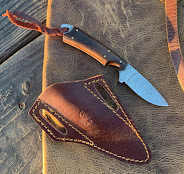
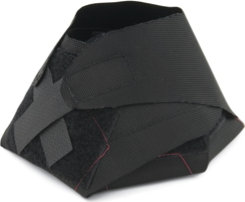
We obtained great national and local level prize support from sponsors including Smart Pak, Hoof Wraps, Camel Bak, Noble Outfitters, Eclectic Horseman magazine, and Sanctuary Leather, while we had great local sponsorship including Alamo Automotive, Riders Tack and Feed, Diamond Bar V Horseshoeing, Leonard Benally and Chaff Haye. The donated prizes allowed us to put $1,300 worth of prizes back into the hands of competitors.   

The obstacle course consisted of the following obstacles:

Trot Weave - weave between six cones placed 7.5 feet apart, turn and repeat.

Stop and Back - stop your horse on a spot and back in a straight line for a distance determine by your competitive division.

Drag - retrieve a rope off the fence and drag an orange bag of cans about 25 fee.  Open Division had to also back their horse while dragging the bag.

360 Degree Turn - riders entered a 6' x 6' square box and executed a 360 degree turn; Open had to also turn 360 in the opposite direction as well.

Slicker - riders had to retrieve a slicker from the fence and run their horses necks and hips with the slicker.

Gate - open, go through and re-latch a 10' gate.

Cowboy Curtain - or what ACTHA calls the Vine Simulator. Riders rode through the rope curtain and Open Division had to back their horses through it.

Circle Trot - riders trotted around a 35 foot circle, enter the circle and exit at the trot going the opposite direction.

ACTHA competitors and their horses are judged per obstacle on a 10 point per rider and 10 point per horse system.  The bottom line on ACTHA competitions, be they Competitive Trail Challenges or AOC's is that you expose your horse to more training opportunities, some of which you may not think of, continuing to build that brave, safe trail horse.  And as it is with horses, some were great at dragging a loud, clanking bag but fearful of a yellow slicker handing on the fence, and vice versa. 

My objective for the chosen obstacles was to balance the pure horsemanship tasks with prop related obstacles. In the video below, I am doing the Rider's Brief explaining the negotiation of each obstacle.

Prior to the AOC, I held a short clinic on backing your horse in an arc and extending that to a circle and figure 8. As well as a competitive strategy on jogging into the obstacle, stopping and immediatley backing to get momentum for the backing in an arc as most ACTHA obstacles give you 60 seconds to complete an obstacle and time can be ate up pretty quick on the Figure 8 Backing when you are in deep sand or with traffic cones placed far apart.

The competitors and their horses also had 30 minutes or so to warmup on my fixed obstacle course which included single and two level Bridges, Cones for backing in arcs, Two Step platform, Narrow Figure Z path, Nerf Bar obstacles and a heavy Rope Curtain.


Saturday, July 25, 2015

Arena Obstacle Challenge - September 2015


I have received many requests for ideas and videos on arena obstacles for training horses to be better trail horses. Most of the ideas for obstacles I use come from what I have seen Craig Cameron use in his clinics, or from the Extreme Cowboy Association (EXCA) races, or obstacles from American Competitive Trail Horse Association (ACTHA) events, which are Competitive Trail Challenges (CTC's) or Arena Obstacle Challenges (AOC's).

ACTHA provides a governing body for CTC's and AOC's, approved obstacles and evaluation criteria, awards, and a point system for regional and national awards. Competing in ACTHA events is a good way to meet new horse people and get a horse gentled - making a better trail horse - in a pretty informal type of competition. ACTHA has several divisions to cover the skills of the rider and experience of the horse, from novice to advanced riders.  


Competitive Trail Challenges or CTC's are a six mile or longer trail course where riders encounter an obstacle each mile and negotiate that obstacle for a score. An example of an obstacle is a rope gate - see picture at right - a simple gate is made from rope running through PVC pipe and anchored on one end to a T post and to the other end with a loop or something that allows the rider to open/un-latch it and move the horse through, then re-latching the gate.  You can imagine the coordination and support needed to mark trails, build obstacles and provide transportation for judges to and from.

Arena Obstacle Challenges (AOC's) are conducted in an arena where a horse and rider enter and complete 6 to 10 obstacles. If you have seen an EXCA event, then you can imagine an ACTHA AOC as a much slower race where while there are time limits to complete an obstacle, time in not factored into the score.

You can go to the ACTHA obstacle page to see the list of approved obstacles.   

Because of the lack of local ACTHA or other obstacle type events in my area, I am hosting an Arena Obstacle Challenge on Saturday 26 September - I'll be posting an article and video in early October on this event. We going to try a slightly different format with a obstacles clinic on one ACTHA approved obstacle in the morning prior to the the AOC competition. This will be an obstacle that the rider's will not encounter during the subsequent AOC. After the last rider competes, the arena and obstacles will be open for riders to work on any obstacles they and their horses need to work on. I'm doing it this way so competitors can get more of a training value out of the AOC.

All ACTHA events give back to a charity. ACTHA give 20% of their proceeds to the designated charity picked by the ride host and the ride host (that would be me) gives a percentage of the entry fees to the charity. Our designated charity for the September AOC is Perfect Harmony Horse Rescue and Sanctuary, a 501 (c)(3) non-profit organization based out of Chaparral, New Mexico.

There is also an ACTHA blog with articles on ACTHA competitors and ideas for obstacles and training.


You have to be a ACTHA member to sign up for and ride in an AOC or CTC, ACTHA has a 30 day trial membership for basically $10 per person.  Otherwise annual membership is $35 per year for an individual, $50 for a family of two, or $85 for a family of four.  ACTHA membership information can be found here.


Sunday, February 23, 2014

Equine Extravaganza Supports Perfect Harmony Horse Rescue and Therapeutic Horsemanship


Horse people from all over the country conduct local or regional type events each and every weekend simply for the love of horses. These event coordinators put in long hours, make phone call after phone call, coordinate set up and often do much of the labor themselves, mostly without any recognition at all.  Again they simply do it for the love of horses and these events benefit all through the education it provides.   

These events can be shows, competitions, clinics, trail rides or what I attended a couple weeks ago, which was the second annual Equine Extravaganza, hosted on 14 February by the Lower Valley Horsemen's Association (LVHA) of the greater El Paso, Texas area. This event was coordinated and ran by Vicki Maly of the LVHA featured a training demonstration, stallion showcase and bidding for breedings, a Therapeutic Horsemanship demonstration, an auction and raffle, and several vendors offering tack, related gear and western theme goods.  Event proceeds went to support a local horse rescue and Therapeutic Horsemanship organization.  

This year Vicki was able to bring in Rudy Lara of No Strings Attached Horsemanship of La Mesa, New Mexico to give a Cowboy Dressage demonstration.   That's Rudy in both pictures above, with his exceptionally trained Bay Horse.  While most of the people in the area probably have heard of Rudy, it would be an even bet to say that they came away with a higher regard for Rudy's horsemanship skills as he demonstrated tenants of Cowboy Dressage and talked to the crowd about understanding horses to enable a relationship that training can be built upon.  La Mesa, New Mexico is within the greater El Paso, Texas - Las Cruces, New Mexico area. Those people with training issues shouldn't hesitate in contacting Rudy Lara to help out.  You can visit Rudy's website here to get more information.  

Therapeutic Horsemanship of El Paso (THEP) demonstrated the how's and why of matching disabled people with horses to further rehabilitation or to just provide a quality of life to that person's that horses are uniquely suited to provide.  The THEP team in action in the picture at right. Their website is here.


The Stallion showcase featured three stud horses, including this Leopard Appaloosa in the picture above, whose owners auctioned off breedings which all went to support the THEP and Perfect Harmony Horse Rescue, a Chaparral, New Mexico based rescue organization, a 501(c)(3) non profit horse rescue and sanctuary, concentrating on older and/or disabled equine. 

And speaking of Therapeutic Horsemanship, the American Competitive Trail Horse Association (ACTHA) is hosting 1,000 competitive trail rides and arena obstacle competitions in March, to benefit the 850 Therapeutic Horsemanship centers in North America under the Professional Association of Therapeutic Horsemanship International (PATH).  These rides are scheduled on March 15th and 16th all across the country and hope to raise $1 Million dollars for PATH.   If you are interested in supporting this in any way, so to the ACTHA site and find a ride near you and call the event coordinator.     


Tuesday, January 29, 2013

Don't Feed The Bears ACTHA Obstacle


A few weeks ago I rode with my wife in an American Competitive Trail Horse Association (ACTHA) competitive trail ride event north of Las Cruces, New Mexico at Isaaks Ranch.

These ACTHA rides features a six mile trail course with six obstacles where judges grade the horse and rider on their ability to negotiate each obstacle.

One of the obstacles we faced was called "Don't Feed The Bears". This obstacle was designed to replicate hanging a food bag high in a tree to "bear proof" it like you would on a pack trip when camping in bear country. The way this obstacle was set up was a lariat rope over a tall gate entrance and connected to a large blue Wal-Mart bag. See picture at right top.

The rider had to approach the gate through a set of cones, retreive the coiled end of the lariat handing on a fence, then back their horse up pulling the blue Wal-Mart bag off the ground a certain distance.

Most of the horses and riders in our group had a hard time at this obstacle, as most horses were a little skittish at the blue bag or had trouble accepting the bag moving and leaving the ground.  This was really a good obstacle to test the brave horse.

The way I thought this obstacle should have been approached was if the horse was having some difficulty accepting the blue bag, then an approach to the blue bag just like any other obstacle.  If your horse has trouble as you approach the bag, then let him stop,.... don't let him back off it and when you can tell by his body language and head set that he is more comfortable with the bag there in front of him, then ask him to move forard. You may have to repeat several times before the bag isn't an issue.

You can then side pass him or otherwise move him to the coiled lariat. When you pickup the lariat, I suggest holding the coils in your rein hand (like when you rope) and use your off hand to manage the running end of the lariat so when you back the horse you can keep the rope off his head. Be careful if you hold the coils in one hand so the coiled lariat won't snug down over your hand if your horse bolts.

The video below is an example of this type of obstacle and how you can practice at home or the local arena. Any obstacles like this, if you take your time - really allow your horse the time, will only make him a better and braver horse.


Thursday, November 15, 2012

Trail Ride for Wounded Warriors


All across the country this past Veteran's Day weekend, the American Competitive Trail Horse Association (ACTHA) held Competitive Trail Challenges (CTC) to raise funds for wounded warrior causes. The ride we supported was held in Anthony, New Mexico adjacent to El Paso, Texas with the six mile ride on Bureau of Land Management mananged land.

A total of 20 riders took part and they were all ladies, save for one man working a young horse, all who braved dropping temperatures and 50 mile per hour winds, with the sand blasting that come with riding in the desert during high winds, to complete this ride.  Having your horse in a dust storm or even a rain or hail storm while not pleasant sure as heck builds confidence in the rider on their horse.

ACTHA CTC's are six mile trails with six obstacles that the riders are judged on negotiating. A score is given the horse for his willingness and bravery as the horse works the obstacles and the rider is also judged on their control and horsemanship. I judged the bridge obstacle which was a frame of 4 x 4 posts and 2 inch by 8 inch planks creating a bridge over a two foot deep arroyo (dry stream bed).

Bridges, maybe more so that any other obstacle, can be pretty intimidating for horses. You can work a bridge until your horse crosses it without hesitation 100 times in a row, then move that same exact bridge someplace else and that same horse will treat the bridge like he has seeing it for the first time.

Most of the riders crossed the bridge on a loose rein with willing horses at a natural head set - what I was looking for. The Open division riders had to halt their horse for three seconds on the bridge before continuing across and we were looking for a horse that stand still, on a loose rein, until asked to depart the bridge.

I gave near as high as scores to riders whose horses showed reluctance or caution to cross the bridge, but because the riders kept their horses centered with as little pressure as necessary, the horse eventually, and within the one minute time restraint, crossed the bridge. To me this showed a good relationship and trust between the horse and rider.


These pictures above show a horse's obvious concern about the bridge he is asked to cross. The rider keeps the horse centered and allows the horse to drop his head and checkout the brige, resulting in the horse willing to cross when asked again. If the rider would have asked the horse to cross before it is ready, sure the horse may have went across - may even have bolted across - I saw this a couple times, but allowing the horse time to think, reduces his anxiety and cross in a more confident manner. This will pay off for that horse and rider - increasing trust and helping that horse become a braver horse.

Friday, November 2, 2012

ACTHA Trail "Ride To Remember" for Veterans


American Competitive Trail Horse Association (ACTHA) "Ride to Remember", is a nationwide charity trail ride to honor and benefit our Veterans, on Saturday and Sunday, November 10th and 11th, at many locations across the country.  Proceeds of this ride will primarily go to Horses For Heroes an veterans rehabilitation and support organization in Sante Fe, New Mexico.

The local ride we will be donating prizes for, helping on, and riding in will be hosted on BLM land near Anthony, New Mexico adjacent to West El Paso, Texas.  Rebecca Eldridge and April Hanley are the Saturday and Sunday Ride Coordinators respectively.  These are two ladies who should be commended for volunteering to ramrod this benefit and there is alot work involved planning the obstacles, getting judges and such. 

The address for the ride check in is 333 Spirit Hill Lane, Anthony, New Mexico. Directions to the ride are: Take Exit 6 (Transmountain Exit) off of I-10. Head South on Transmountain (towards Mexico) to Doniphan. This will be a "T" intersection. Take a Right on Doniphan. Take a Left at the first stop light onto FM 259. Continue on FM 259. At the first stop sign, which is a "Y" intersection, go straight. At the second stop sign, veer left. Follow that road around a sharp left curve, a sharp right curve, and at the second sharp left curve, turn right onto Koogle Road, this will be a dirt road. Follow Koogle and turn Left onto Mountain Vista. The ride start point will be the first place on the right with the white pipe fence.

See Map Below. Click on the map and I think it may give you a larger and clearer view.

ACTHA trail rides are a slow, leisurely six mile trail course with six obstacles and judges evaluating how each rider and horse negotiate that obstacle, which are spaced approximately a mile apart. 

For more information you can call 915.443.4128 or 915.249.1186 or go to the ACTHA web site, click on "Our Rides" tab, then "Rides and Locations" and enter "NM" in the search box.

The Anthony, New Mexico ride will begin with a rider checkin at 0800 am, followed by a rider's brief at 0900 am, with the first group of rider's departing on the trail by 1000 am. After the ride there will be a catered no-host lunch by local Rudy's BBQ prior to the awards ceremony.  Hope to see a lot of people enjoing their horses on a trail ride in what should be really nice weather and supporting this great cause.


Friday, March 2, 2012

Trail Riding Competition


Most horse people know about the American Competitive Trail Horse Association (ACTHA) and the “competitive rides” that ACTHA affiliates conduct. If you think you are put off by the competition aspect, I don;t think you will be so inclined with ACTHA as these are very low key events where you go on a trail ride of six miles or so with a group of other horses and riders and at every mile marker you have an “obstacle” to complete with your horse. These obstacle could be simply backing in a circle, side passing a short distance, opening a gate, riding over poles laid across the ground or other simply demonstrations of your horsemanship and your horse’s abilities.

On the plus side these events bring people together, share horsemanship and camaraderie, and the horses are probably grateful for a nice slow benign ride. Really, if you have been thinking about trailering to an ACTHA event – then go. The only downside really is the entry costs and sometimes a facility fee charged by the hosting ranch. But you spend that much eating supper out once a week.

Another like event is a Trails and Trials challenge that an area Horseman’s Association holds twice a year. Much like ACTHA rides with obstacles to test you and your horse, these Trails and Trials Challenge do not cover the distance than an ACTHA ride will, but offer more challenging obstacles.

My wife and I rode in one recently, at the Issacks Ranch outside of Las Cruces, New Mexico in the shadow of the Organ Mountains – simply a beautiful place. Some of the obstacles we faced were: entering a knee deep pond to open, go through, and close a gate; cross a bridge over a water obstacle; back uphill; dismount and lead your horse over a couple jumps; remount then throw a loop on a roping dummy; side pass over logs arrayed in a “Z” pattern; a little more challenging because of the one obstacles after another format.  The picture at right is my wife on her big Sorrel Gelding Charlie.  Charlie is not the bravest horse in the world, but he does well since my wife gives him time to accept things and he knows he'll get a fair deal with her.  The obstacles he is looking at is a couple of old horse blankets laying in a frame they had to step over.  Suprisingly several horses had issues with these blankets due to the smell.  Charlie is alert, but relaxed - note the loose reins.  After maybe 10-15 seconds my wife asked Charlie to move forward across the obstacle.       

These types of events is a way many horse clubs or associations could generate more interest in trail riding. I was happy to see some young people participating and one in a particular, a young cowboy riding a two year old mare who really impressed me with the time he took with this horse and how his horse responded.


Thursday, October 27, 2011

Trail Obstacles


Westy wrote and asked: "I really like the videos on getting your horse to accept strange objects. I will be riding soon in an American Competitive Trail Horse Ride and would like some ideas on what I need to get my horse used to."

Westy, thanks for your question. If I were you I would go to the ACTHA site and download the rules and list of obstacles. This will give you an idea on what you will see. I would not limit my training to these obstacles. I think the point in desensitizing horses to strange (and scary to them) objects to getting then to think through problems as opposed to reacting out of instinct and fleeing. Horses are naturally curious animals,...that is why so many horses get bitten on the nose by snakes,...so you can use that portion of their instinct to make them more comfortable with thinking first.

However, just because your horse has no problem going over an obstacle, say a tarp, at your place does not mean that any tarp, at any place will be just as easy. This may be frustrating to you, but bear with it. It just appears different to the horse. Being at a strange place, away from his herd can also bring in anxiety.


The vibes you give off can also make a difference. If you are nervous about approaching an object, your horse will sense that as well. You are in effect telling him to be wary. Another mistake is pushing your horse too fast on an obstacle. Let him figure it out. That 20 seconds or so, or even 5 minutes, that you allow him to figure it out will go along way towards establish trust in you and teaching him to think.  Cowboy curtain obstacle at left. 


I think another mistake may be the tendency to drive your horse from one obstacle or problem directly to another rather than give him time to absorb that lesson and calm down before you challenge him again. That way you can approach each and every obstacle as a new challenge as opposed to running them all together and over loading the horse. 360 degree pole travel, pin wheel, obstacle at right.


We host riders at our place to go over obstacles and expose their horses to different things, again not primarily to get ready for those exact obstacles, but to expose their horses to different things, teaching them that they can think through a problem. Wooden bridge obstacle at left.


No matter if you are preparing for an ACTHA ride, or have a horse for informal riding, exposing your horse to obstacles will make it a safer horse if you do it right. Western or even English show horses and hunter-jumper horses alike can benefit from trail riding as well. Single log obstacle at right.


Friday, February 26, 2010

American Competitive Trail Horse Association


The American Competitive Trail Horse Association (ACTHA) is a fairly new organization with the stated mission of “Providing an enjoyable venue showcasing the wonderful attributes of the great American Trail Horse, granting them the recognition they so richly deserve. To maintain a registry open to all breeds and a point designation system which will stay with each horse for its lifetime, thereby adding to their value and distinction. To enable the humane treatment of horses in need. ACTHA donates up to 50% of its proceeds to eligible horse charities annually.”

The ACTHA website advertises the following: “That the Organization’s Founders, Karen VanGetson and Carrie Scrima, were tired of long drives to multi-day, timed competitions. They wanted a venue where they could enjoy their horses and the wonderful scenery around them. Of course they wanted some challenge and a chance to learn as well as show off their horse’s talents. But most of all they wanted beauty, camaraderie and fun! Try as they might to find this in areas they were interested in or on a national level, their search was in vain. So Carrie said "Let’s start one!" Thus the foundation for ACTHA began.”

ACTHA is billed as casual competition and has been endorsed by well known Horse Trainers, Clinton Anderson and Monty Roberts.

A Competitive Trail Challenge is billed as a 6-10 mile ride, negotiating judged obstacles such as crossing streams, crossing bridges, riding up/down steep hills,
backing around obstacles, dragging a log, opening/closing gates, jumping over a low log, riding through vine styled obstacles, trotting over spaced logs, stand in position while a loud noise is present, walk on/around plastic tarp/bags and trotting/cantering from point A to point B.

Sounds like a good training venue to me. If you are interested in the American Competitive Trail Horse Association, please go to their website and poke around.

http://www.actha.us/