Showing posts with label arena obstacle challenge. Show all posts

Monday, September 28, 2015

ACTHA Arena Obstacle Challenge Results 26 Sept 2015


This past weekend saw us hosting an Arena Obstacle Challenge (AOC) under the sponsorship and guidelines of the American Competitive Trail Horse Association (ACTHA). We had 14 riders sign up to compete, relatively small by national ACTHA standards, but par for ACTHA participation in the West Texas/Southern New Mexico area.  This event was a benefit for the Perfect Harmony Horse Rescue and Sanctuary.

Division Winners (see photo below).  Open Division: Luanne Santiago, Competitive Pleasure Division: Marianne Bailey tied with her daughter Jessica Bailey, but had more pluses, so Marianne took home the Blue Ribbon and the first place Plaque.  Competitive Novice Division: Terri Rutter. Scout Division: Angela Beltran-Flores.   Additionally, each of my judges, Vicki Maly and Arden Evans each gave out a custom hoof pick to the rider who made the biggest positive impression on them.  Luanne Santiago and Dan Bailey, riding a huge Percheron, won the hoof picks.


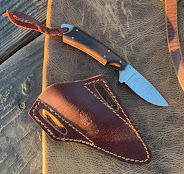
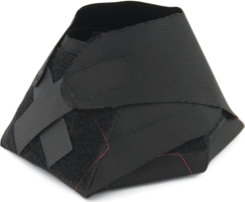
We obtained great national and local level prize support from sponsors including Smart Pak, Hoof Wraps, Camel Bak, Noble Outfitters, Eclectic Horseman magazine, and Sanctuary Leather, while we had great local sponsorship including Alamo Automotive, Riders Tack and Feed, Diamond Bar V Horseshoeing, Leonard Benally and Chaff Haye. The donated prizes allowed us to put $1,300 worth of prizes back into the hands of competitors.   

The obstacle course consisted of the following obstacles:

Trot Weave - weave between six cones placed 7.5 feet apart, turn and repeat.

Stop and Back - stop your horse on a spot and back in a straight line for a distance determine by your competitive division.

Drag - retrieve a rope off the fence and drag an orange bag of cans about 25 fee.  Open Division had to also back their horse while dragging the bag.

360 Degree Turn - riders entered a 6' x 6' square box and executed a 360 degree turn; Open had to also turn 360 in the opposite direction as well.

Slicker - riders had to retrieve a slicker from the fence and run their horses necks and hips with the slicker.

Gate - open, go through and re-latch a 10' gate.

Cowboy Curtain - or what ACTHA calls the Vine Simulator. Riders rode through the rope curtain and Open Division had to back their horses through it.

Circle Trot - riders trotted around a 35 foot circle, enter the circle and exit at the trot going the opposite direction.

ACTHA competitors and their horses are judged per obstacle on a 10 point per rider and 10 point per horse system.  The bottom line on ACTHA competitions, be they Competitive Trail Challenges or AOC's is that you expose your horse to more training opportunities, some of which you may not think of, continuing to build that brave, safe trail horse.  And as it is with horses, some were great at dragging a loud, clanking bag but fearful of a yellow slicker handing on the fence, and vice versa. 

My objective for the chosen obstacles was to balance the pure horsemanship tasks with prop related obstacles. In the video below, I am doing the Rider's Brief explaining the negotiation of each obstacle.

Prior to the AOC, I held a short clinic on backing your horse in an arc and extending that to a circle and figure 8. As well as a competitive strategy on jogging into the obstacle, stopping and immediatley backing to get momentum for the backing in an arc as most ACTHA obstacles give you 60 seconds to complete an obstacle and time can be ate up pretty quick on the Figure 8 Backing when you are in deep sand or with traffic cones placed far apart.

The competitors and their horses also had 30 minutes or so to warmup on my fixed obstacle course which included single and two level Bridges, Cones for backing in arcs, Two Step platform, Narrow Figure Z path, Nerf Bar obstacles and a heavy Rope Curtain.


Saturday, July 25, 2015

Arena Obstacle Challenge - September 2015


I have received many requests for ideas and videos on arena obstacles for training horses to be better trail horses. Most of the ideas for obstacles I use come from what I have seen Craig Cameron use in his clinics, or from the Extreme Cowboy Association (EXCA) races, or obstacles from American Competitive Trail Horse Association (ACTHA) events, which are Competitive Trail Challenges (CTC's) or Arena Obstacle Challenges (AOC's).

ACTHA provides a governing body for CTC's and AOC's, approved obstacles and evaluation criteria, awards, and a point system for regional and national awards. Competing in ACTHA events is a good way to meet new horse people and get a horse gentled - making a better trail horse - in a pretty informal type of competition. ACTHA has several divisions to cover the skills of the rider and experience of the horse, from novice to advanced riders.  


Competitive Trail Challenges or CTC's are a six mile or longer trail course where riders encounter an obstacle each mile and negotiate that obstacle for a score. An example of an obstacle is a rope gate - see picture at right - a simple gate is made from rope running through PVC pipe and anchored on one end to a T post and to the other end with a loop or something that allows the rider to open/un-latch it and move the horse through, then re-latching the gate.  You can imagine the coordination and support needed to mark trails, build obstacles and provide transportation for judges to and from.

Arena Obstacle Challenges (AOC's) are conducted in an arena where a horse and rider enter and complete 6 to 10 obstacles. If you have seen an EXCA event, then you can imagine an ACTHA AOC as a much slower race where while there are time limits to complete an obstacle, time in not factored into the score.

You can go to the ACTHA obstacle page to see the list of approved obstacles.   

Because of the lack of local ACTHA or other obstacle type events in my area, I am hosting an Arena Obstacle Challenge on Saturday 26 September - I'll be posting an article and video in early October on this event. We going to try a slightly different format with a obstacles clinic on one ACTHA approved obstacle in the morning prior to the the AOC competition. This will be an obstacle that the rider's will not encounter during the subsequent AOC. After the last rider competes, the arena and obstacles will be open for riders to work on any obstacles they and their horses need to work on. I'm doing it this way so competitors can get more of a training value out of the AOC.

All ACTHA events give back to a charity. ACTHA give 20% of their proceeds to the designated charity picked by the ride host and the ride host (that would be me) gives a percentage of the entry fees to the charity. Our designated charity for the September AOC is Perfect Harmony Horse Rescue and Sanctuary, a 501 (c)(3) non-profit organization based out of Chaparral, New Mexico.

There is also an ACTHA blog with articles on ACTHA competitors and ideas for obstacles and training.


You have to be a ACTHA member to sign up for and ride in an AOC or CTC, ACTHA has a 30 day trial membership for basically $10 per person.  Otherwise annual membership is $35 per year for an individual, $50 for a family of two, or $85 for a family of four.  ACTHA membership information can be found here.


Wednesday, December 31, 2014

What are You doing with Your Horse?


Not too long ago, I wrote about Cross Training for horses and how some are taking advantage of the different opportunities to make their horse better. Not necessarily better in a competitive event way, but in the making of an all around horse.

I received a few comments from people who said their horses did better in the arena when they took them on trail rides.

Using competitive events to make a better horse usually requires the rider to push away thoughts of scoring, but also thoughts of what other people think of you and your horse. After all, it's about your horse. And like the saying go's - "there's always tomorrow".

During Arena or Trail Obstacle Challenges, where the horse and rider approach and move through obstacles usually within a time constraint, some rider's will try and push their reluctant horse across a bridge or through a curtain only to meet resistance from the horse. He just isn't ready. To try and push him through the obstacles usually builds anxiety within the horse, justify his initial apprehension, and decreases the chances of him completing that obstacle in the time allowed. And if your horse totally refuses to complete an obstacle and the rider moves on to the next, the horse has just learned he can refuse an obstacle and out wait you. I think the rider's who are thinking long term, will wait on their horse to approach the obstacle in a willing manner.  In the video below, I intended on letting my horse set the approach to the yellow slicker.  I took a slow jog towards to the slicker, letting my horse look at it and drop his nose on, and as he showed no big issue with it, I asked him forward so I could position up to retrieve the slicker. 

More than one rider tried to urge their horse towards the slicker before that horse was ready to accept getting closer and in each case it didn't work out well as the horse was on his own schedule.  The difference between approaching the obstacle when the horse is ready and trying to push him to the obstacle because of a judges clock, is often only a few seconds.     


When a rider pushes aside the time constraint, and doesn't worry any judging or scoring, time can be taken to use that obstacle to make a better horse. I've seen rider's run out of time then ask the judge if they can continue, and I have seen rider's work on the obstacle after the competition is over. In both instances, thinking of their horse.

The same goes for Ranch Sorting. It has become became pretty popular. While it's a timed event, you can approach your runs as slow as you like, providing your partner thinks the same, and focus on letting your horse get comfortable with what you asking him to do, and build on that. If someone brings a new horse, unexposed to cows, we'll let that horse and rider follow a seasoned horse and move among the cattle getting that horse used to not only the cows but a crowded environment.

Sometimes you'll see an otherwise considerate rider caught up with the competitive aspect, trying to sort as many cows as they can in 90 seconds, regardless on how his horse feels about it. Jerking and pulling on the horse's mouth until the horse is forced to move his feet to keep his balance, or if the horse raises his head and starts backing to get away from the pain of the bit, which slows his forward movement, the rider applying spurs in less than a judicious manner to move the horse forward - in both these cases the horse is getting second billing and the event becomes detrimental to advancing the horse creating some things that have to be undone, which is sometimes harder than teaching something new.

The video below is a Ranch Sorting run by two friends of mine. Aside from just looking like fun, these two work quickly when they need to and take their time when that's necessary. While their horses are old hands at this, this is an example of riding without creating anxiety in your horse and making his worse.